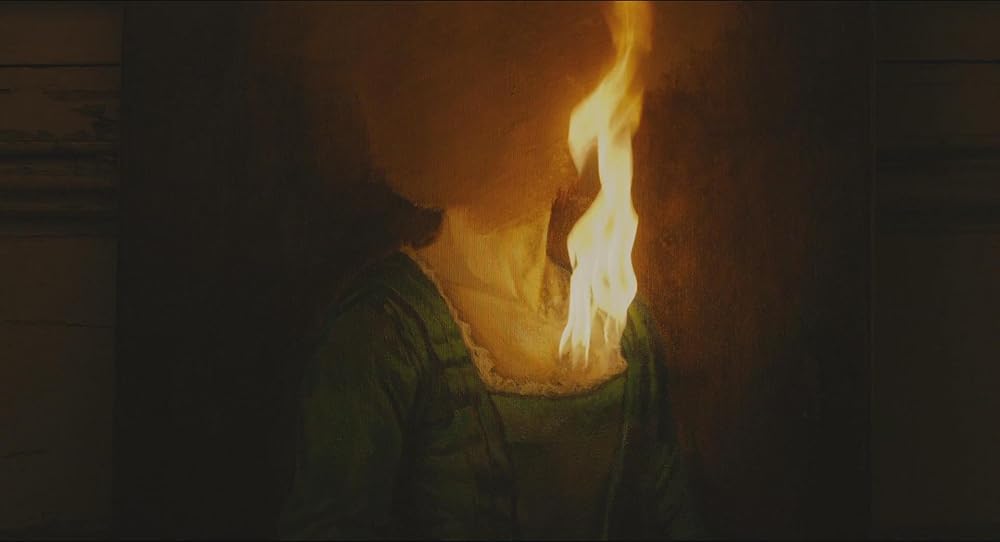
You know what kind of plan never fails? No plan … because life cannot be planned.
Stream it on HBO Max, Netflix, or these sites. I also recommend the Criterion blu-ray (or DVD), which has a lot of bonus features including a black and white version of the movie — I enjoyed it more than color. All Criterion discs are 50% off in the Barnes & Noble sale every July and November. (Amazon might lower some of its prices in response.)
This is on Netflix, which has also put the whole movie on YouTube, free for non-subscribers:
A documentary about a political campaign is the opposite of most movies: we the viewers know from the beginning what’s going to happen, and we know that the people on screen didn’t know at the time. That reversal of the norm is particularly striking in this documentary about upstart candidates who challenged Democratic incumbents for Congress in 2018, leading to one of America’s biggest electoral shocks in a long time.
Some of the best parts are future Representative Alexandria Ocasio-Cortez behind the scenes — goofing around with her boyfriend, mocking her opponent’s campaign leaflet, giving herself a pep talk before a debate, etc.
I wish every American would watch Knock Down the House along with Mitt (the documentary about Romney that’s one of my favorite movies of 2014), and realize you can go to a place on the political spectrum that’s far from where you live and still find good people.
In the beginning, the fundamental question is: “Why you? Why do you think you can do this?” The reason why: because nobody else would. So literally anybody could! Because the alternative is no one.
This movie isn’t for everyone. It’s long and slow — at times you feel like the movie is daring you not to be bored. You’ll go away from it not being sure exactly what happened, and you might spend a long time thinking about it afterwards. This Rolling Stone review said:
This stunning, slow-build thriller from South Korean director Lee Chang-dong sizzles with a cumulative power that will knock the wind out of you. … Lee has crafted a hypnotic and haunting film that transcends genre to dig deep into the human condition. You won’t be able to get it out of your head.
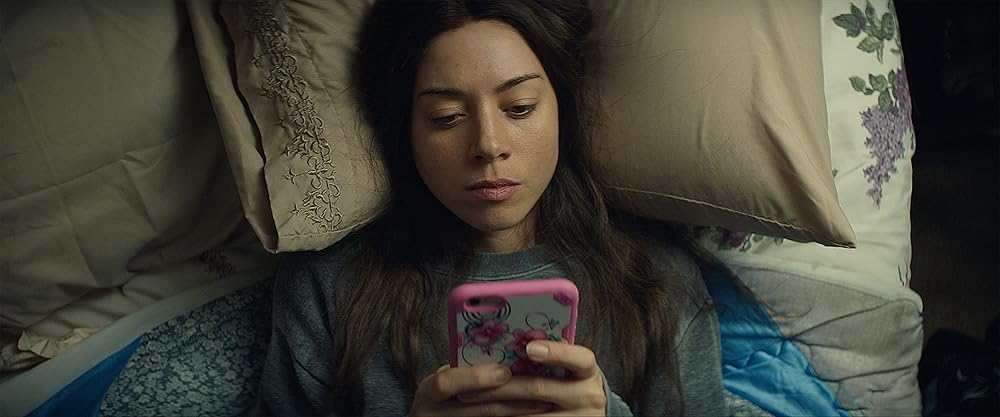
No film has yet captured both the lure and the psychosis of social media quite like “Ingrid Goes West,” a dark comedy — or is it a warning? — about a lonely soul who seeks connection and finds it, unfortunately for everyone in her orbit, on Instagram. This is … a true horror story for our digital times. In the most acutely relatable ways and built around deft turns by Aubrey Plaza and Elizabeth Olsen, it skewers how we live and lurk these days in timelines fraught with angled sunlit selfies, artisanal avocado toasts and the FOMO-frothing torment of scrolling compulsively through other people’s bliss.
Aubrey Plaza says she was inspired by Taxi Driver (my favorite movie of 1976) in playing the title role of Ingrid Goes West and producing the movie. There are also parallels to my 1962 pick, Lolita. Instead of the older man, Humbert Humbert, who’s inappropriately fixated on the teenage girl in Lolita, Ingrid is a young woman inappropriately fixated on another young woman. Both Humbert and Ingrid rearrange their lives around her, moving into a new place and spinning a web of lies and manipulation in order to be near her, while living in constant fear that someone will see through their facade of normality. Lolita is about a twisted relationship with an age gap, where the obsessive person is a sex addict in the more traditionally dominant position of being older, while Ingrid Goes West is about a twisted friendship with a gap in social status, where the obsessive person is an internet addict in the less dominant position.
50 is, in many ways I think, the best age.
Oh, we’re in a sweet spot.
It’s the sweet spot. You still got — touch wood — time.
We’re ripe — we’re ripe fruit. If you hang onto the branch any longer, you’re just gonna wither on the vine, and I won’t do that.
So what do you do then?
Drop!
Or do you want to be plucked? … I’d much rather be plucked than dropped. But who’s gonna pluck you at this age?
(Adrian Titieni, Maria-Victoria Dragus, Lia Bugnar, Mălina Manovici, Vlad Ivanov, Rareș Andrici. Directed by Cristian Mungiu.)
My post about my favorite movie of 2007 — 4 Months, 3 Weeks and 2 Days — talked about writer/director Cristian Mungiu’s style of unflinching realism in showing young women trying to obtain an abortion in Romania under Soviet communism. In Graduation, he applies a similar style to corruption in the same country, but in the present day.
After a girl on her way to high school is sexually assaulted and injures her wrist while defending herself, she seems to be in no physical or psychological condition to take a series of exams which she needs to do well on to be admitted to a prestigious London university. The outside world responds coldly: exam administrators don’t offer her any accommodations (and aren’t even sure whether to allow her to take the exams wearing a cast), while the police are feckless at solving the case. Without support from the system on any legitimate level, the girl’s father feels driven to help her through unscrupulous means by exploiting his connections.
Of course, Romania isn’t the only country in which social capital is king. Because of that, “Graduation” resonates not just as a vivid portrait of a culture at a particular moment in time, but also of the most enduring and confounding contradictions of human nature itself. Although he’s contemplating age-old arguments about means vs. ends, Mungiu nonetheless infuses them with timely relevance, both in the context of a world order that has become broader and more cosmopolitan, and a society that, 30 years after its rebirth, still struggles with establishing agreed-upon norms, expectations and rules of the road. …
The power of the film is cumulative, as the filmmaker spins a mesmerizing morality tale from the dross of daily life. In his skillful hands, the ordinary turns out to be anything but.
One of the few negative reviews said Graduation “suffers from too many narrative threads that don’t resolve.” It’s true that this movie deprives us of clarity and finality, leaving us to wonder what exactly happened and how it’s all going to turn out. That might bother you … or you might find meaningfulness in the uncertainty.
Once she starts on this path, there’s no going back. … You know in your heart that it’s not right. …
If there were any other way, I wouldn’t even think of it. … All that counts is getting to a normal world.
How you get there matters too. It’s not fair to —
Being attacked in broad daylight in a crowded place, is that fair? … You ended up in some library because you were fair. Sometimes the result is all that matters.
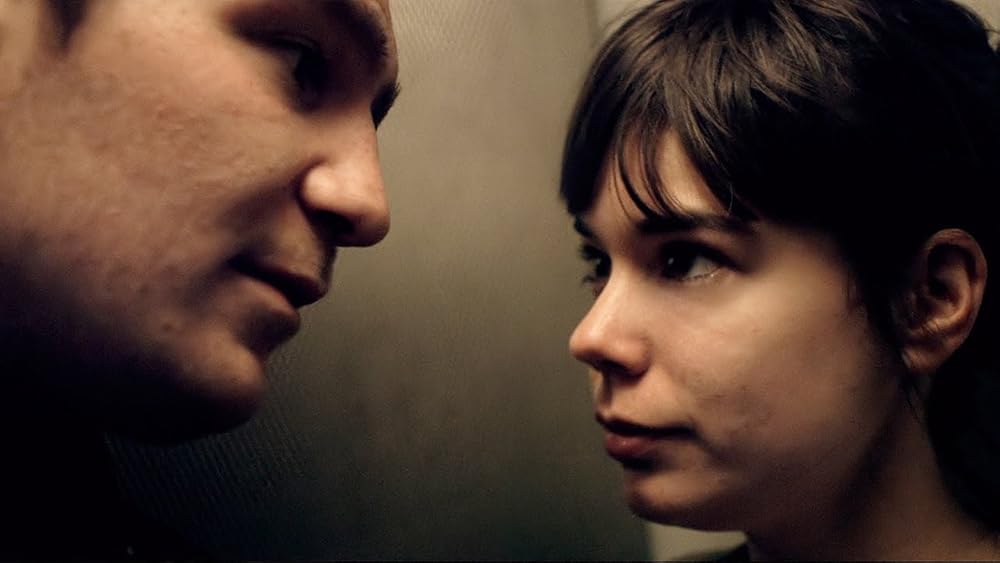
(Laia Costa, Frederick Lau, Franz Rogowski, Burak Yigit, André Hennicke. Directed by Sebastian Schipper.)
This whole thriller was done all in one take!
The director (Sebastian Schipper) and the lead actress (Laia Costa) talk about how they did it in this half-hour interview:
The director has a small part in another German movie on my list: the man riding a bike in Run Lola Run (my favorite of 1998).
You can stream Victoria on Kanopy or these sites. Just don’t stream it on any site that interrupts it with ads, because this is a movie where the flow of the whole experience is more important than the plot.
(Ben Affleck, Rosamund Pike, Neil Patrick Harris. Directed by David Fincher.)
A “top-shelf mystery and pitch-black comedy” according to this review, which says:
Gone Girl may come advertised as a thriller, but that’s [director David Fincher] being a trickster — he’s gone and made the curtest, nastiest, most acidic black comedy about the marital accord since The War of the Roses … borne out of the view that, basically, it’s surprising husbands and wives aren’t all murdering each other. And that’s also its more serious subject — the “narcissistic armor” that we don, “the vision of ourselves that we all project and construct, for our parents, for our teachers, and as we go out in the world and try to mate,” as Fincher explained.
Ever hear the expression: simplest answer’s often the correct one?
Actually, I’ve never found that to be true.
(Paul Rudd, Amy Poehler, Ellie Kemper, Bill Hader. Directed by David Wain.)
This could be mind-numbing if you’re not in the mood for a parody of romantic comedies. But go into it with the right mindset, and They Came Together is uproarious. This review sums it up:
Lovelorn, “handsome in a non-threatening way” Joel (Paul Rudd) and adorably klutzy Molly (Amy Poehler) bump into each other on the street, fall in love, split before the holidays and then make up via a grand public gesture. If it all sounds familiar, that’s the point. Starting from the glistening aerial shot of Manhattan, this film knowingly and cleverly spoofs every rom-com cliché this side of When Harry Met Sally … The irreverent jokes are often fiercely funny — and prodded along by the sparkling, gung-ho leads. We’ll have what they’re having.
This look behind the scenes of Mitt Romney’s 2008 and 2012 presidential campaigns is different from The War Room (my favorite movie of 1993), in which the candidate, Bill Clinton, is seen only occasionally, and the real stars of the movie are his campaign managers. Mitt focuses on the candidate and his family, who are hard not to like, regardless of your politics.
A year ago, we told you we’d love you no matter how this thing turned out. And —
Now you’re not so sure?
(Adèle Exarchopoulos, Léa Seydoux. Directed by Abdellatif Kechiche.)
An inordinate amount of attention has been given to the extended sex scenes which led to an NC-17 rating but aren’t the most important part of this 3-hour movie. Blue Is the Warmest Color is about so much more than sex; it’s about life, conversation, food, art, philosophy, anxiety, power. …
What’s your name?
Adèle.
Adèle, pretty name. … Adèle means something in Arabic — I think it means … hope? Love?
No, justice.
I was close.
Stream Blue Is the Warmest Color on Tubi (free with ads), Kanopy, or one of these sites.
(Bruce Dern, Will Forte, June Squibb, Stacy Keach, Bob Odenkirk. Directed by Alexander Payne.)
You told the sheriff that you were walking to Nebraska?
That’s right — to get my million dollars.
What million dollars?
“We are now authorized to pay one million dollars to Woodrow T. Grant, Billings, Montana. …”
“Mega Sweepstakes Marketing”? Dad … they’re just trying to sell you magazines.
It says I won!
So mail it in. I’ll help you.
I’m not trusting the mail with a million dollars!
(Ethan Hawke, Julie Delpy. Directed by Richard Linklater.)
The emotional end of the Before trilogy. (The first two are some of my favorites from 1995 and 2004.)
When I was younger, I just wanted everything to speed up … so I could be on my own, so I could be free from my parents and school and all that shit. You know, I just wanted to close my eyes and wake up and be an adult. And then I kind of feel like that happened, and now I just want everything to slow down.
It’s strange, I’ve always had this feeling, no matter where I am in my life, that it’s either a memory or a dream. …
Me too, I mean, it’s like, is this really my life? Like, is it really happening right now? … Every year I just seem to get a little bit more humbled and more overwhelmed about all the things I’m never gonna know or understand.
That’s what I keep telling you: you know nothing! … But not knowing is not so bad. I mean, the point is to be looking, searching, to stay hungry, right? …
I know, it’s true — I just wish it was a little easier.
How do you mean?
Oh, just to maintain a certain level of passion, you know? I mean, it used to come so naturally. I remember when I was younger, me and all my writer friends, we just felt like we were doing something important, you know, like this was our time. … It just grew out of all this energy, you know, this creativity or whatever ambitions people have. … I think you gotta be a little deluded to stay motivated.
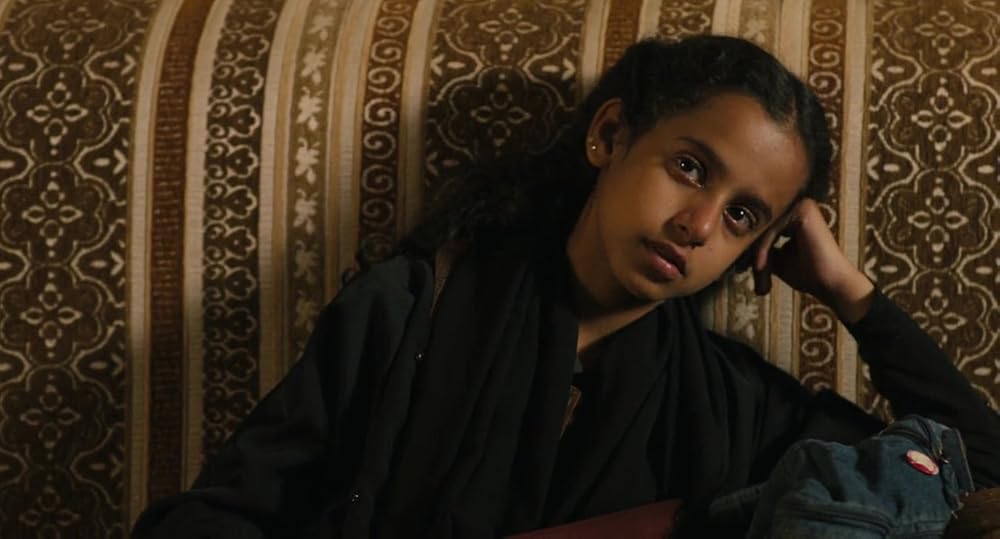
The movie opens with the title character tying the purple laces of her Converse sneakers while listening to a catchy song by the American-based hipster band Grouplove. She might be a 12-year-old girl from any part of the world, except that her colorful hair barrettes are hidden under a black abaya: Wadjda … lives in a small town outside Riyadh, Saudi Arabia. …
She desires nothing more than a bicycle with green handlebars and ribbons that just arrived at a local shop. She’s saved a bit of money from selling homemade bracelets at school and asks her mom for a loan for the rest. “Have you ever seen a girl on a bike?” is her mother’s scornful reply. …
You might say, then, that this groundbreaking film is a sweet coming-of-age story about a girl who really wants to buy a bike. But it’s far more compelling — and subversive — than that implies. … Most of what you need to know about fundamentalist Muslim society is on screen. The boys wear comfortable white clothes to play in the park; girls are completely covered, head to toe, in black. Boys yell back and forth at each other while they play their games; girls must remain practically silent in public. As the strict school headmaster … says, “A woman’s voice is her nakedness.”
And “Wadjda” itself is certainly the product of a clear, strong voice. The film is filled with finely composed shots that show both the beauty and the ugliness of Saudi Arabia, inside and out.
This film combines a plot worthy of a great novel with the emotional impact of a great melodrama. It involves a struggle for child custody, the challenge of a parent with Alzheimer’s, the intricacies of the law, and the enigma of discovering the truth. In its reconstruction of several versions of a significant event, it is as baffling as “Rashomon.” … “A Separation” will become one of those enduring masterpieces watched decades from now.
[A Separation] is a fine account of Iran’s predicament; anyone interested in the mysteries of change and tradition — the difficulties faced by many people as they try and reconcile themselves to modern values and norms — will learn much from it. I saw it in Tehran this summer, and so movingly did it reflect what I was witnessing around me, I was surprised that the authorities had allowed it to be screened.
He won’t come with me. If he does, I’ll cancel my request for a divorce. … Will you come?
No I won’t. …
Please explain why.
Let her explain why we should move abroad in these circumstances.
You give me one reason to stay.
My father — I can’t leave him.
But you can leave your wife?
When did I leave you? …
When you tell your wife and child to leave, isn’t that leaving them? …
If you don’t want to stay, I can’t keep you by force. …
His father has Alzheimer’s. … Does he even realize you are his son?
I know he is my father. …
Your daughter or her future is not important to you? …
So the children in this country don’t have a future?
(Anna Paquin, J. Smith-Cameron, Jean Reno, Allison Janney, Mark Ruffalo, Matt Damon, Jeannie Berlin, Kieran Culkin, Matthew Broderick, Kenneth Lonergan. Directed by Lonergan.)
A high school student, Lisa Cohen (Anna Paquin), has a comfortable upbringing on the Upper West Side of Manhattan until her life gets shaken up by becoming a strange part of a bus accident that kills a stranger named Monica (Allison Janney).
In this sprawling drama (which is either 2 and a half or 3 hours long, depending on the version), we see how the tragedy affects Lisa in many ways, both overt (getting involved with a police investigation, the victim’s family, litigation, etc.) and subtle. Before the accident, her comments in classroom discussions about hot topics like terrorism are righteous expressions of moral clarity. After the accident, she’ll have to navigate one moral grey area after another.
Lisa isn’t well-equipped to do that at age 17. Whenever any adult seems like they might be there for her and offer guidance, emotions get in the way. Lisa, who’s a virgin at the beginning of the movie, also struggles with relationships with boys her age (including a sleazy cocaine user played by Kieran Culkin), and she has an inappropriate fixation on one of her teachers (Matt Damon). She can’t seem to form a strong connection to anyone. You wonder if the strongest personal connection she’s ever had in her life was with Monica, in the last few minutes of her life.
In many movies focused on teenagers, the parents are predictable, cardboard figures, but this movie allows Lisa’s mom, Joan Cohen (J. Smith-Cameron), to be a complex character in her own right. Divorced from Lisa’s dad, Joan starts an unsatisfying relationship with Ramon (Jean Reno), who comes across as well-meaning but stilted, and he doesn’t realize how little he’s connecting with Joan. (When Joan observes that only after the play she’s starring in got critical acclaim did audiences start reacting effusively even though the play was always the same, Ramon misses the subtlety of that point and reacts as if she had simply said, “I think I’m terrible in the play!”)
Margaret had a troubled path to being seen: it was shot in 2005 but was held up by legal issues until 2011. It could’ve used more editing; we didn’t need the subplot about Lisa’s relationship with her father (played by the director, Kenneth Lonergan), who lives across the country in California and feels caught between his daughter and his girlfriend. The few scenes with Matthew Broderick, who plays Lisa’s English teacher, easily could’ve been cut; while he is in the only scene that explains the movie title (which is from a poem — there’s no character named Margaret in the movie), they could’ve either changed the title or named one of the characters Margaret. (This paragraph was inspired by this video about problems with the movie’s editing.)
So Margaret is uneven, but it’s held together by a strong cast, especially a phenomenal performance by Anna Paquin. Anytime something in the movie might seem implausible or overdramatic, Paquin convinces us that this is real life — that this is what it’s really like to be a passionate, flawed teenager who’s just woken up from a dream world to face a reality she isn’t ready for.
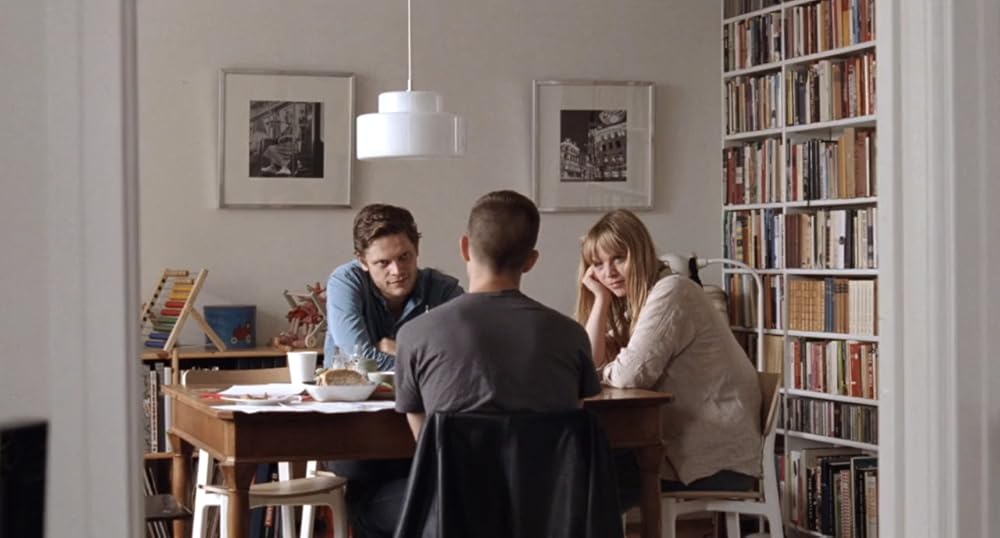
(Anders Danielsen Lie, Hans Olav Brenner, Ingrid Olava. Directed by Joachim Trier.)
Oslo, August 31st and The Fire Within (my favorite movie of 1963) are both based on the same novel. They’re about a man who struggles with suicidal thoughts after being released from treatment for an addiction. The book and the 2011 movie are both about a heroin user; the 1963 movie is about an alcoholic. In both movies, his drug of choice is less important than the fact that he can’t connect with other people, while he longs for some kind of comfort or meaning in his life.
“Oslo, August 31st” is quietly, profoundly, one of the most observant and sympathetic films I’ve seen. Director Joachim Trier and actor Anders Danielsen Lie … understand something fundamental about their character. He believes the ship has sailed without him. … He can’t go back and he can’t go forward. … What a sad, true film.
Once in a while a movie hits you on a personal level as a pure experience, and that’s what happened when I watched it. At the heart of it is an honest conversation between two friends about the most difficult thing in the world: one of them doesn’t know if he wants to live anymore. It’s an impossible conversation, but in art you can talk in an intimate way about something that serious. …
[Louis Malle, the director of The Fire Within, is] one of the absolute greatest filmmakers. He was always dealing with transgressive subject matter but did it in such a light and unshocking way that you just had to respect. … I was inspired by the idea of doing something like Alice in Wonderland, with a dream logic that you recognize intuitively — also like in David Lynch’s films. You can’t reduce it to something you can explain easily; you have to just see it. …
I think people should keep making versions of this film every ten or twenty years, in different cities and with different characters, and maybe it will be a mirror of society at a certain time.
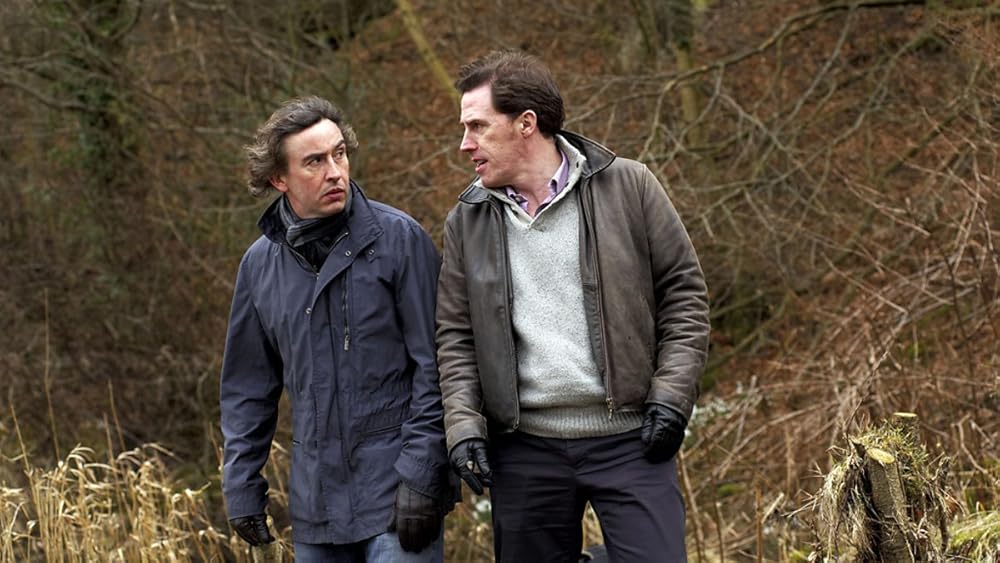
Steve Coogan (the one staring into the camera in that picture) and Rob Brydon play fictionalized versions of themselves on an all-expenses paid tour of restaurants in northern England, where one of them has been assigned to write a travel essay.
The two men have a teasingly competitive friendship and a penchant for doing spontaneous impressions of other entertainers, as in this scene where they argue over who does the better James Bond:
Later, some of the lines from their Bond impressions come back when they riff on the ABBA song “The Winner Takes It All”:
You’ll miss a few references in this movie (not in those clips) unless you’re familiar with Coogan’s signature character, a buffoonish radio- and talk-show host named Alan Partridge who’s better known in the UK than in the US. The movie repeatedly uses his catchphrase: shouting “Aha!!!” Meanwhile, Brydon’s trademark bit is making his voice sound like he’s a “small man trapped in a box.” This isn’t just played up for laughs; Coogan is taking stock of his life in middle age and reflecting on how silly both men’s most famous achievements are.
While it isn’t a conventionally plot-driven movie, The Trip does have a story that’s quietly touching. And watch for a cameo by Ben Stiller. Bottom line: The Trip is one of the best dramedies of this century.
I would never stick the knife in. I might just, like, tickle you with a knife.
(Juliette Binoche, William Shimell. Directed by Abbas Kiarostami.)
Set in Italy but largely in English and French, this movie starts out feeling like Before Sunrise (one of my favorites of 1995): two people meet in a picturesque European city and share their musings about life over the course of a leisurely day. …
But keep watching and you’ll be stunned at what Certified Copy turns into. One review sums it up: “Imagine a cinematic equivalent of a Picasso cubist portrait, but instead of showing multiple perspectives of an object in an image, it presents experiences from different periods in a life in a single narrative.”
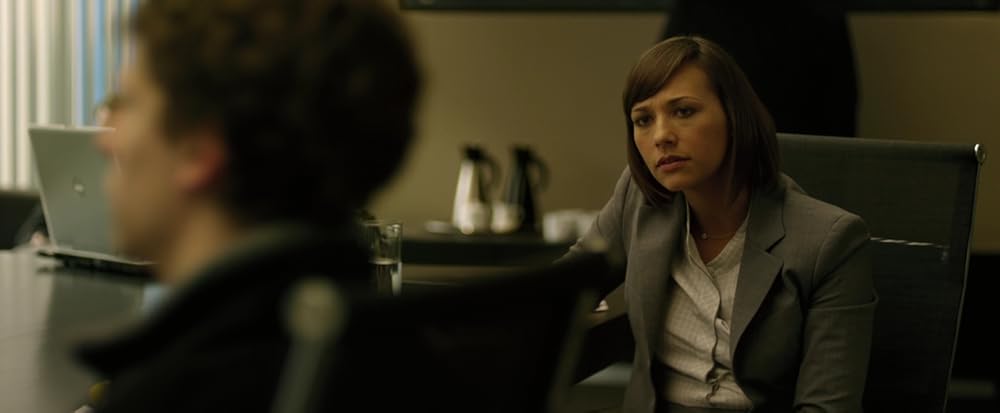
(Jesse Eisenberg, Armie Hammer, Justin Timberlake, Andrew Garfield, Rooney Mara, Rashida Jones. Directed by David Fincher.)
The trailer for this biopic about Mark Zuckerberg (played by Jesse Eisenberg) said: “You don’t get to 500 million friends without making a few enemies.” Today that sounds absurdly small as the total number of Facebook users in the world at the time, and the idea that this movie reveals the dark side of Facebook seems quaint.
You really don’t need a forensics team to get to the bottom of this. If you guys were the inventors of Facebook, you’d have invented Facebook.