(Michael J. Fox, Christopher Lloyd, Thomas F. Wilson, Lea Thompson, Elisabeth Shue. Directed by Robert Zemeckis.)
It’s unfortunate that the most famous thing about Back to the Future Part II — the vision of the future in the year 2015 — happens in the weakest part of the movie. After the first Back to the Future (my favorite movie of 1985) gives us a solid explanation for how Marty McFly (Michael J. Fox) accidentally gets stuck in the past and gives him compelling motivations once he gets there, this sequel disappoints by offering a vague, flimsy premise for why they choose to go to the future. Not much is explained about the trouble Marty’s kids get into … and whatever it is, why not simply warn him in the present and let him take action when the time comes, instead of skipping ahead and scrambling to fix everything at the last minute?
Back to the Future Part II improves later on, when Marty’s idea of using time travel to make money leads him to a dystopian version of his hometown. (For all the traveling through time, no one in the trilogy ever travels far in space; Hill Valley is their whole world.) Now the movie has turned into a disturbing neo-noir that includes some of the darkest and most memorable scenes of the trilogy.
(Eric Bogosian, Ellen Greene, Alec Baldwin. Directed by Oliver Stone.)
This Oliver Stone movie was inspired by the true story of a brash, Jewish radio host (played by Eric Bogosian) who might have become another Howard Stern — if only …
The movie finishes that sentence.
Talk Radio gets classified as a “drama,” but it often feels like a comedy — a very dark comedy. Ebert’s 4-star review is dead on:
the movie doesn’t feel as boxed-in as many filmed plays do, perhaps because radio itself is such an intimate, claustrophobic medium. It’s not over there in the TV set; it’s inside your head. In a sense we become listeners of “The Barry Champlain Show,” and as he pushes his listeners more and more insistently, egging them on, we begin to feel how some of the people out there in the night could go over the edge. …
This is Barry Champlain, reminding you that sticks and stones can break your bones, but words … cause permanent damage.
(Winona Ryder, Christian Slater, Shannen Doherty. Directed by Michael Lehmann.)
If you were happy every day of your life, you wouldn’t be a human being. You’d be a game show host.
Heathers, a colorful yet dark teenage comedy, has sadly grown more resonant over the years.
Stream Heathers on Amazon Prime (to rent now, but sometimes it’s included with Prime), Tubi (free with ads), the Roku Channel (also free with ads), and these sites.
I had begun to appreciate some of the life rhythms of the characters. Most films move so quickly and are so dependent on plot that they are about events, not lives. “The Unbearable Lightness of Being” carries the feeling of deep nostalgia, of a time no longer present, when these people did these things and hoped for happiness, and were caught up in events beyond their control. …
Daniel Day-Lewis plays Tomas with a sort of detachment that is supposed to come from the character’s distaste for commitment. … For him, sex seems like a form of physical meditation, rather than an activity with another person. … Juliette Binoche, as Tereza, is almost ethereal in her beauty and innocence, and her attempt to reconcile her love with her lover’s detachment is probably the heart of the movie. …
The film will be noticed primarily for its eroticism. … Catering to audiences of adolescents, who are comfortable with sex only when it is seen in cartoon form, Hollywood has also not been comfortable with the complications of adult sexuality — the good and the bad. What is remarkable about “The Unbearable Lightness of Being,” however, is not the sexual content itself, but the way [director Philip Kaufman] has been able to use it as an avenue for a complex story, one of nostalgia, loss, idealism and romance.
Lena Olin and Daniel Day-Lewis
If I had two lives, in one life I could invite her to stay at my place, and in the second life I could kick her out. Then I could compare and see which had been the best thing to do. But we only live once. Life’s so light — like an outline we can’t ever fill in or correct.
(Gaspard Manesse, Raphaël Fejtő, Francine Racette, Philippe Morier-Genoud, François Berléand, Irène Jacob. Directed by Louis Malle.)
The director and writer, Louis Malle, based this movie on his own childhood experience attending a Catholic boys’ boarding school in Nazi-occupied France. As a movie about the Holocaust, Au Revoir les Enfants is all the more poignant for never showing a concentration camp.
My children, we live in a time of discord and hatred. Lies are all-powerful. … Those who should guide us betray us instead. More than ever, we must beware of selfishness and indifference. You’re all from wealthy families. … Because you’ve been given much, much will be asked of you.
According to Quentin Tarantino, the title for the film Reservoir Dogs (1992) came about after a patron at a Video Archives rental store, where Tarantino used to work, misheard his film suggestion of Au Revoir les Enfants as “Reservoir Dogs.”
Stream Au Revoir les Enfants on the Criterion Channel (with extras) or Max. If you don’t subscribe to the Criterion Channel, try a free trial.
(Kevin Costner, Gene Hackman, Sean Young, Will Patton. Directed by Roger Donaldson.)
This neo-noir is based on the same novel as The Big Clock, one of my favorite movies of 1948. But while the older movie revolved around a media conglomerate and was largely set in its imposing headquarters, No Way Out revolves around the federal government and has many scenes in the Pentagon.
Rotten Tomatoes says the critics’ consensus is that this “modern spin on the dense, stylish suspense films of the 1940s features fine work from Gene Hackman and Sean Young, as well as the career-making performance that made Kevin Costner a star.”
There are also some notable players in the supporting cast. The director of the CIA is played by Fred Thompson … a future Senator in real life. A fictional Senator in the movie is played by Howard Duff … who 40 years earlier was a prisoner in Brute Force, my favorite movie of 1947. A woman who’s targeted because she knows too much is played by Iman … the future wife of David Bowie. And if you look closely, you can see a shot of Kevin Costner at a party next to an unknown extra … named Brad Pitt.
“No Way Out” is one of those thrillers … where the plot gives us a great deal of information, but the more we know, the less we understand. It’s like a terrifying jigsaw puzzle. And because the story is so tightly wound and the performances are so good, I found myself really caring about the characters. That’s the test of a good thriller: when you stop thinking about the mechanics of the plot and start caring about the people. … “No Way Out” is a superior example of the genre, a film in which a simple situation grows more and more complex until it turns into a nightmare not only for the hero but also for everyone associated with him. At the same time, it respects the audience’s intelligence, gives us a great deal of information, trusts us to put it together and makes the intellectual analysis of the situation one of the movie’s great pleasures.
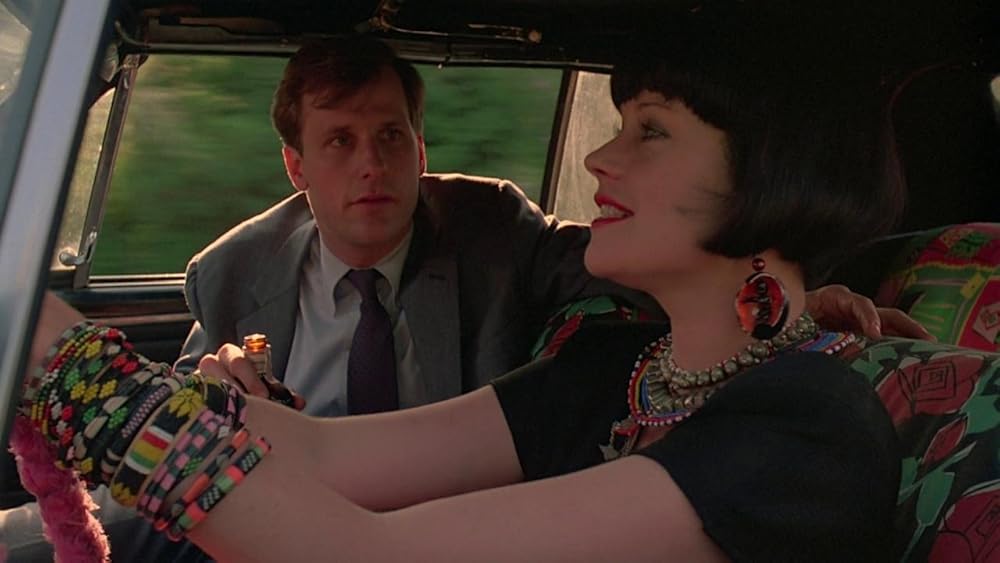
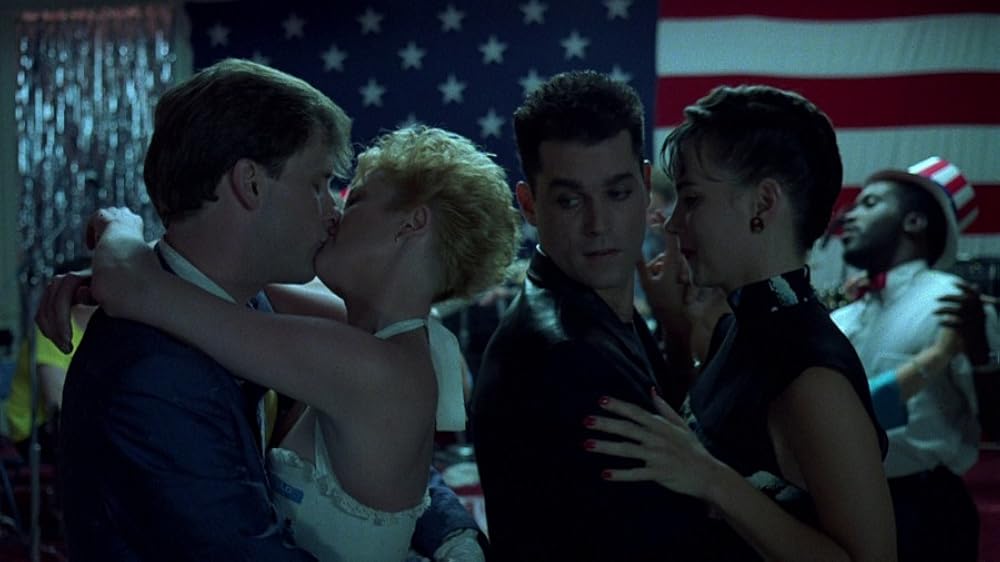
(Jeff Daniels, Melanie Griffith, Ray Liotta. Directed by Jonathan Demme.)
This movie starts out like a modern-day Bringing up Baby (my favorite of 1938): a quirkily effervescent woman brazenly flouts social norms, doesn’t seem to have a job, and suddenly becomes devoted to making a conventionally respectable man have a more adventurous life no matter how much he resists. Something Wild eventually turns into something less silly and more scary. The movie’s juxtaposition of genres could have felt disjointed, but it’s held together by three perfectly cast actors: Jeff Daniels (as the seemingly ordinary bank executive), Melanie Griffith (a “manic pixie dream girl,” at least on the surface), and Ray Liotta (in his breakthrough role, playing a charming creep named Ray).
It’s better to be a live dog than a dead lion.
Stream Something Wild on Tubi (free with ads), Amazon Prime (it left but will likely come back), or these sites.
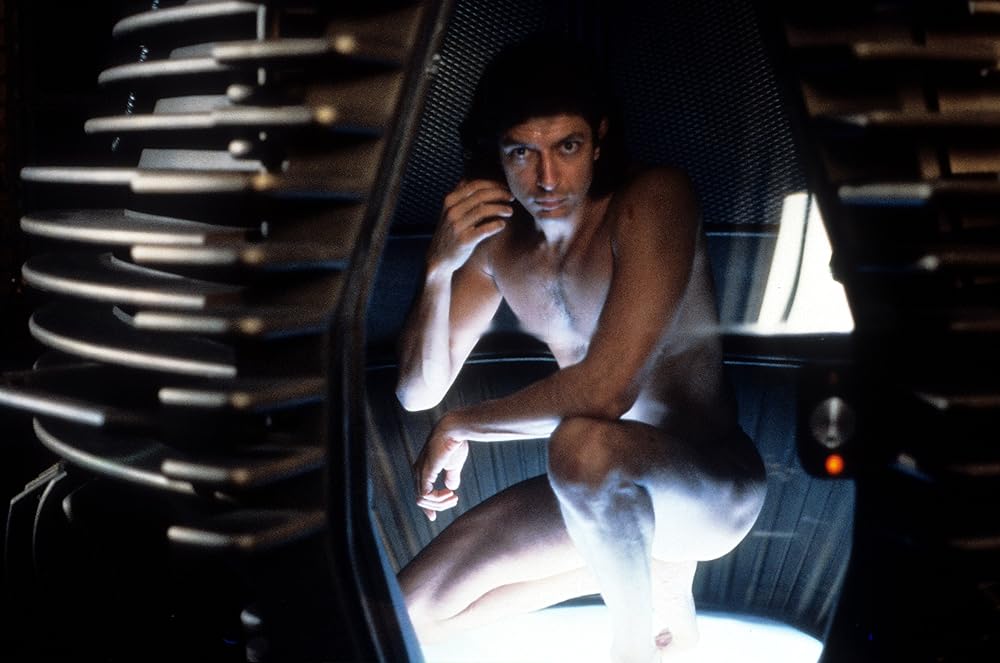
(Jeff Goldblum, Geena Davis, John Getz. Directed by David Cronenberg.)
Have you ever heard of insect politics? … Neither have I. Insects don’t have politics. … No compassion, no compromise. … I’d like to become the first insect politician.
(Woody Allen, Mia Farrow, Michael Caine, Dianne Wiest, Barbara Hershey, Max Von Sydow, Carrie Fisher, Sam Waterston [uncredited]. Directed by Allen.)
The emotional anchor of this ensemble dramedy is Hannah (Mia Farrow), who’s so self-sufficient that other people resent her for it. One of her two sisters (Dianne Wiest), who nervously smokes cigarettes and uses cocaine, feels lost and insecure in her creative aspirations and her love life. Their other sister (Barbara Hershey) is unhappily living with a withdrawn artist (Max Von Sydow) when she clicks with Hannah’s husband (Michael Caine).
Meanwhile, Hannah’s ex-husband (Woody Allen) has a health scare that sends him into an existential crisis. He struggles to understand how life can be worth living when he can’t know if there’s a God or any larger meaning to life.
Woody Allen won an Oscar for the screenplay, and Dianne Wiest and Michael Caine both won Oscars for their performances.
“Hannah and Her Sisters” … is organized like an episodic novel, with acute little self-contained vignettes adding up to the big picture. Each section begins with a title or quotation on the screen, white against black, making the movie feel like a stately progression through the lives of its characters. Then the structure is exploded, time and again, by the energy and the passion of those characters. …
By the end of the movie, the section titles and quotations have made an ironic point: We try to organize our lives according to what we have read and learned and believed in, but our plans are lost in a tumult of emotion. …
When [the three sisters] meet for lunch and the camera circles them curiously, we sense that in some ways the movie knows them better than they will ever know themselves.
Here’s a clip from that scene:
I found the movie’s use of color rather “blah,” so I tried rewatching it in black and white. That helped me appreciate the movie’s visual choices — the way one character will often be disconcertingly blocked off from view, reflecting the characters’ distance from each other.
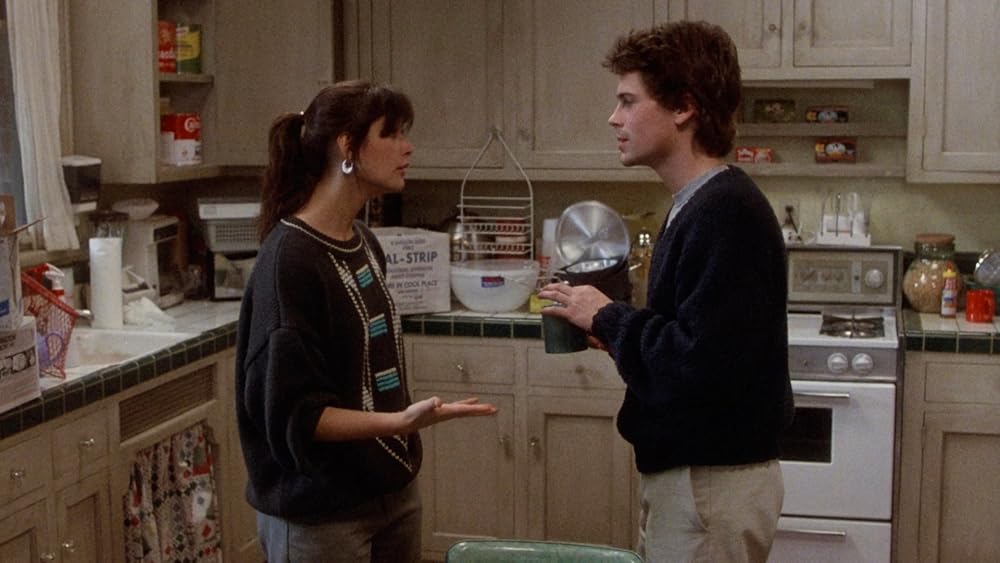
(Rob Lowe, Demi Moore, James Belushi, Elizabeth Perkins. Directed by Edward Zwick.)
So many romantic comedies follow one of two paths: either the main characters heroically overcome seemingly insurmountable obstacles in order to get together in the end (and we’re supposed to assume “they live happily ever after”), or we start with a couple that’s all too familiar with each other when their dull world gets shaken up. This romantic dramedy, based on a David Mamet play called Sexual Perversity in Chicago, is different: it starts with two people (Demi Moore and Rob Lowe) who get together quite easily, but then About Last Night … follows the course their relationship takes over time. We see the joys and struggles of their day-to-day life together in ways that are often glossed over by movies.
If one of the pleasures of moviegoing is seeing strange new things on the screen, another pleasure, and probably a deeper one, is experiencing moments of recognition — times when we can say, yes, that’s exactly right, that’s exactly the way it would have happened. “About Last Night …” is a movie filled with moments like that.
Stream About Last Night …Tubi (free with ads) or these sites.
(Michael J. Fox, Christopher Lloyd, Crispin Glover, Lea Thompson, Thomas F. Wilson. Directed by Robert Zemeckis.)
Tell me, future boy, who’s President of the United States in 1985?
Ronald Reagan.
Ronald Reagan? The actor?! Ha! Then who’s Vice President — Jerry Lewis?
This sci-fi movie has everything: laughs, thrills, love, angst, joy, music. Back to the Future does it all with commitment, with intensity, with passion — as if life depends on it.
You can find new details and meaning in this movie every time you watch it, like the board game “Life” in the background when we see the family around the dinner table early on, as if to say this depressing scene sums up their life. Soon after that, Doc (Christopher Lloyd) introduces Marty (Michael J. Fox) to “the flux capacitor,” the device that “makes time travel possible,” and you might think about how the words “flux capacitor” literally mean: what makes change possible. The movie tells us we need to find ways to change our lives by overcoming fear.
(Griffin Dunne, Rosanna Arquette, Teri Garr, Catherine O’Hara, John Heard, Linda Fiorentino, Cheech Marin, Thomas Chong. Directed by Martin Scorsese.)
I wrote up some in-depth notes on this movie (with videos and photos) here: “17 thoughts on After Hours.”
Just as West Side Story (my top choice of 1961) brings Romeo and Juliet to modern-day Manhattan on the Upper West Side, After Hours seems to take The Wizard of Oz and Alice in Wonderland as inspirations for a dystopian adventure through the Soho area of Manhattan in the ’80s.
Scorsese’s “After Hours” is a comedy, according to the strict definition of that word. … It is, however, the tensest comedy I can remember, building its nightmare situation step by insidious step until our laughter is hollow, or defensive. This is the work of a master filmmaker who controls his effects so skillfully that I was drained by this film — so emotionally depleted that there was a moment, two-thirds of the way through, when I wondered if maybe I should leave the theater and gather my thoughts and come back later for the rest of the “comedy.”
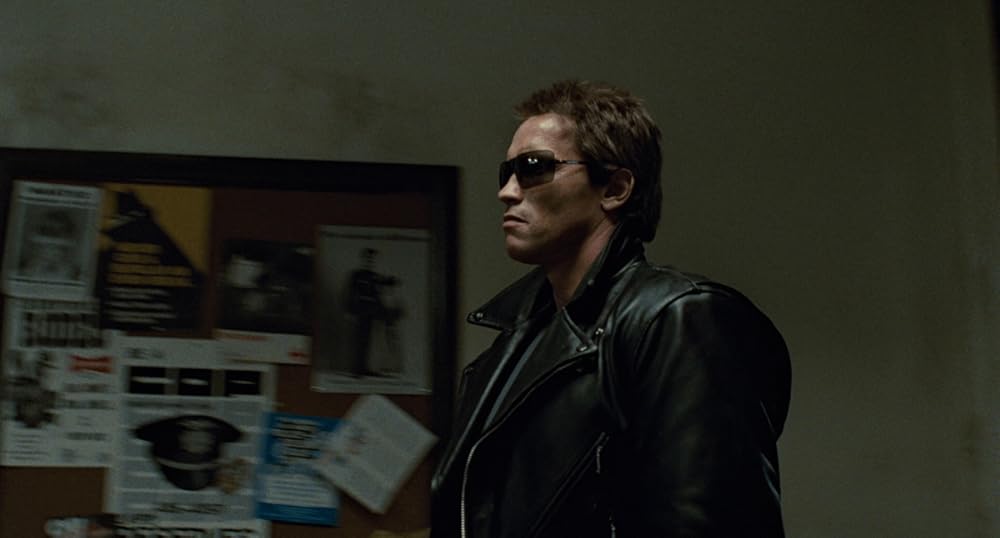
(Arnold Schwarzenegger, Linda Hamilton, Michael Biehn. Directed by James Cameron.)
Arnold Schwarzenegger’s role as the Terminator is an example of how compelling an actor can be without saying much: he says fewer than 100 words in this movie. The Terminator is a seemingly unstoppable cyborg, programmed to go back in time and kill Sarah Connor (Linda Hamilton). The action side of this movie, driven by a heartless killing machine, is balanced out by a human side as Sarah struggles to understand what’s happening to her, with the help of a soldier from the future, Kyle Reese (Michael Biehn).
That Terminator is out there. It can’t be bargained with. It can’t be reasoned with. It doesn’t feel pity, or remorse, or fear. And it absolutely will not stop — ever — until you are dead.
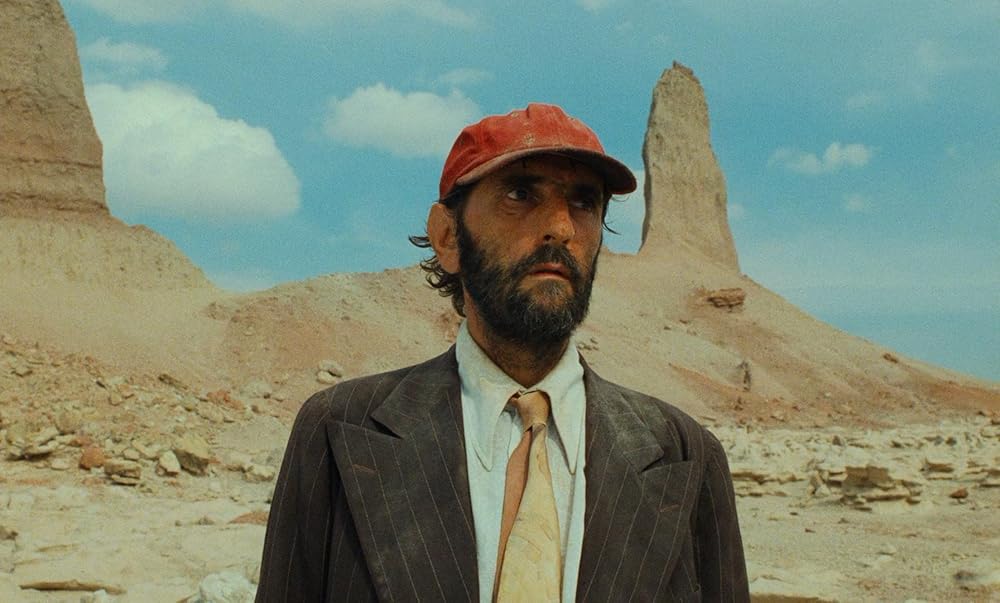
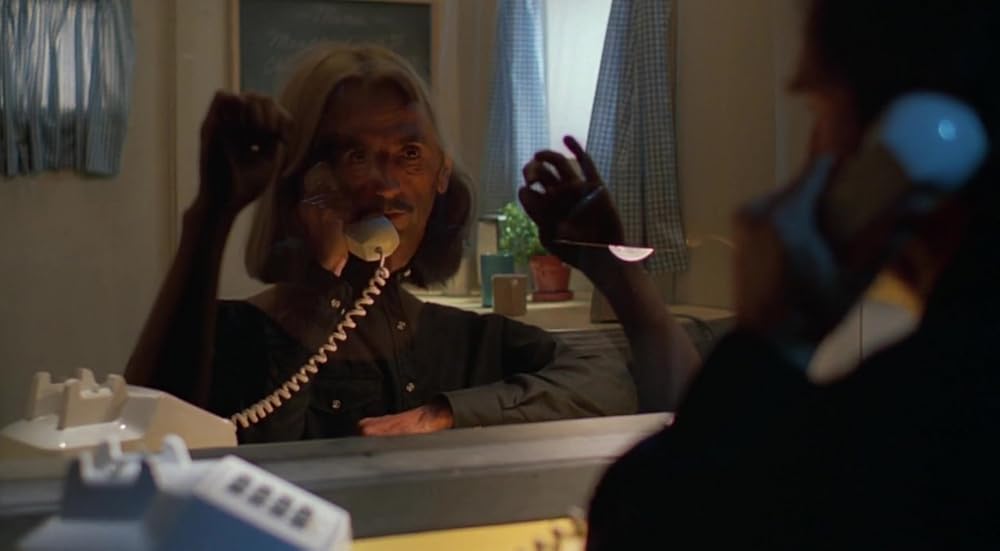
(Harry Dean Stanton, Nastassja Kinski, Hunter Carson, Dean Stockwell, Aurore Clément. Directed by Wim Wenders.)
Ebert noticed how Paris, Texas is unlike other movies:
A man [Harry Dean Stanton] walks alone in the desert. He has no memory, no past, no future. He finds an isolated settlement where the doctor, another exile, a German [Bernhard Wicki], makes some calls. Eventually the man’s brother [Dean Stockwell] comes to take him back home again.
Before we think about this as the beginning of a story, let’s think about it very specifically as the first twenty minutes of a movie. When I was watching “Paris, Texas” for the first time, my immediate reaction to the film’s opening scenes was one of intrigue: I had no good guesses about where this movie was headed, and that, in itself, was exciting. … We haven’t met the characters before in a dozen other films. …
“Paris, Texas” is more concerned with exploring emotions than with telling a story. This isn’t a movie about missing persons, but about missing feelings.
Stream Paris, Texas on the Criterion Channel (with extras including commentary by the director) or Max. If you don’t subscribe to the Criterion Channel, try a free trial.
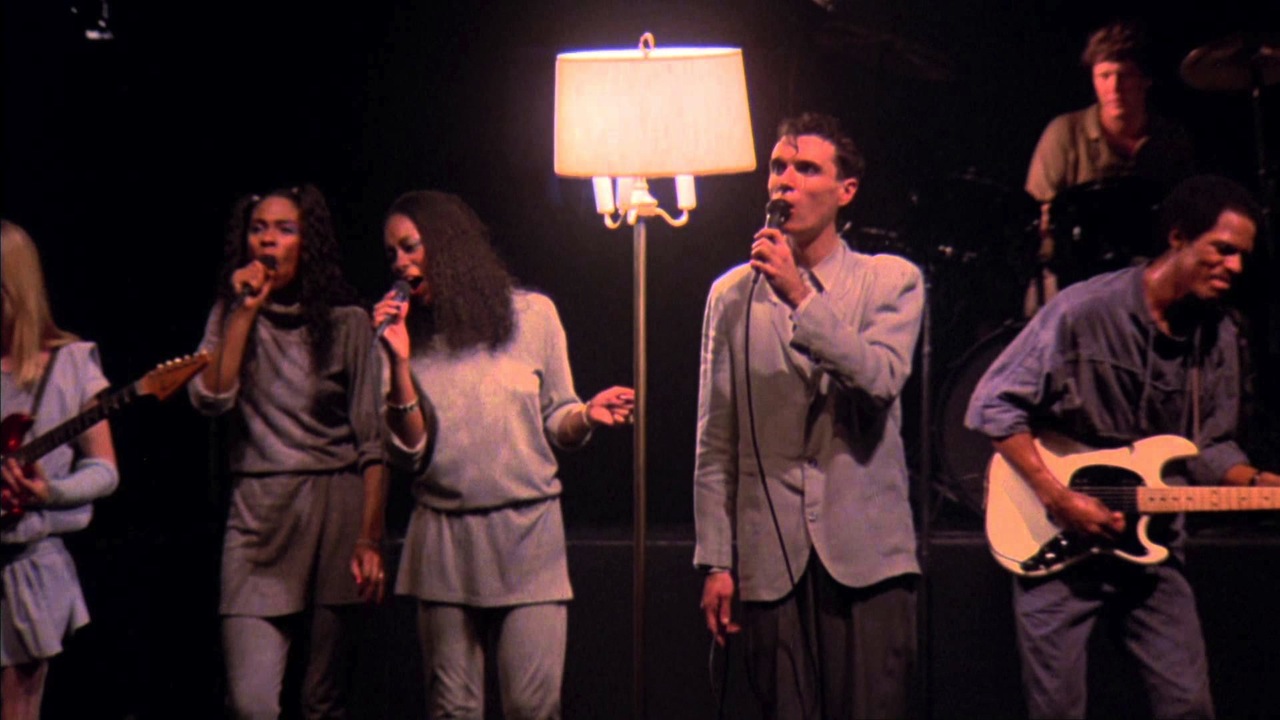
No movie before Stop Making Sense had so pointedly conveyed the thrill of watching artists work together in the same space to create such dynamic, propulsive music. Demme’s cameras captured every smile and every silently exchanged look, putting the viewer right in the thick of the action. Of course, it didn’t hurt that … Talking Heads were at the height of their powers — effortlessly blending punk, funk, New Wave, pop and gospel — but Stop invited us to sit back and marvel at human beings’ seemingly inexhaustible ability to perform such dazzling songs with unfiltered enthusiasm and flair.
(Prince, Apollonia Kotero, Morris Day. Directed by Albert Magnoli.)
Ebert called this “the best rock ’n’ roll debut film since the Beatles made A Hard Days’ Night” (my favorite movie of 1964). At times Purple Rain is silly or over the top. But it has great musical performances by Prince, and a profound message: don’t neglect the songs inside yourself and others.
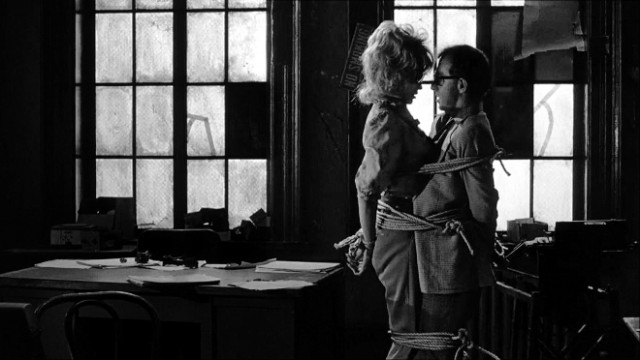
(Woody Allen, Mia Farrow, Nick Apollo Forte. Directed by Allen.)
They’re gonna be back here in a minute — we gotta do something!
What? I can’t move a finger! I’m tied up here like a pig!
If we could just get out of these ropes! They could just let one guy up here. There’s two of us against him.
Yeah, but let me remind you, he’s got an axe. The man has an axe. So there’s two of us — there’ll be four of us in no time.
Stream Broadway Danny Rose on Tubi (free with ads) or these sites.
(Kevin Kline, Glenn Close, Jeff Goldblum, William Hurt, Meg Tilly, Mary Kay Place, Tom Berenger, JoBeth Williams. Directed by Lawrence Kasdan.)
After a man commits suicide, his old college friends and his girlfriend stay in the same house together and try to figure out their lives. This loosely structured ensemble dramedy is set to a great soundtrack that includes Marvin Gaye, Aretha Franklin, Smokey Robinson, Three Dog Night, and the Rolling Stones.
Some of the standout actors are Glenn Close, the only person nominated for an Oscar for acting in The Big Chill; William Hurt, as a Vietnam veteran weighed down by personal problems such as impotence; Meg Tilly, as the dead man’s girlfriend, who seems youthfully naive and out of place in the group; and Jeff Goldblum, who tells one of his friends about his theory of ethics in an old videotape they’re watching (along with Hurt and Tilly’s characters):
Look, nobody thinks they’re a bad person. I’m not even claiming that people always think they’re doing the right thing. They may know that they’re doing something dishonest or insensitive or manipulative, but they almost always think there’s a good reason for doing it. … In addition, you instantly come up against a question of style. My style may be too direct: perhaps, given my style, I seem more nakedly opportunistic or jerky. … But really all that’s happening is I’m trying to get what I want, which is what everybody does. It’s just that some of their styles are so warm or charming … you don’t realize that they’re just trying to get what they want. So you see, my transparent efforts are, in a way, much more honest and admirable.
Why is it what you just said strikes me as a massive rationalization?
Don’t knock rationalization! Where would we be without it? I don’t know anyone who’d get through the day without two or three juicy rationalizations! They’re more important than sex.
Aw, come on, nothing’s more important than sex!
Oh yeah? You ever gone a week without a rationalization?
(Sean Penn, Jennifer Jason Leigh, Phoebe Cates, Judge Reinhold, Ray Walston, Brian Backer, Robert Romanus, Forest Whitaker. Directed by Amy Heckerling.)
Movies in general are so much about women — it’s shocking what a small percentage of them have been directed by women.
Criterion, which has been focusing on female directors, just released a blu-ray (and DVD) with a restored version of Amy Heckerling’s directorial debut, Fast Times at Ridgemont High. The most iconic character in this ensemble movie is a stoner named Jeff Spicoli (Sean Penn), who clashes with his high-school teacher, a strict — but not humorless — disciplinarian named Mr. Hand (Ray Walston). Meanwhile, other students make fumbling attempts at dating and sex.
I finally figured it out. I don’t want sex. Anyone can have sex. … I want a relationship. I want romance.
You want romance? In Ridgemont? We can’t even get cable TV here, Stacy, and you want romance!
A fun, goofy teenage comedy? Yes, but it’s more than that. A serious undercurrent emerges when one of the main characters gets an abortion, which is presented in a notably matter-of-fact way, not as a “controversial issue.” This New York Times video goes into more detail about that plotline after the 3-minute mark, so you might not want to watch it before seeing the movie:
The title of Fast Times at Ridgemont High says a lot: life happens too “fast” to these young people. In their painful awkwardness, they seem incapable of getting it right, but the movie makes them impossible not to love.
Stream Fast Times at Ridgemont High on Tubi (free with ads) or these sites.
(Anthony Franciosa, Christian Borromeo, Mirella D’Angelo, Veronica Lario, Ania Pieroni. Directed by Dario Argento.)
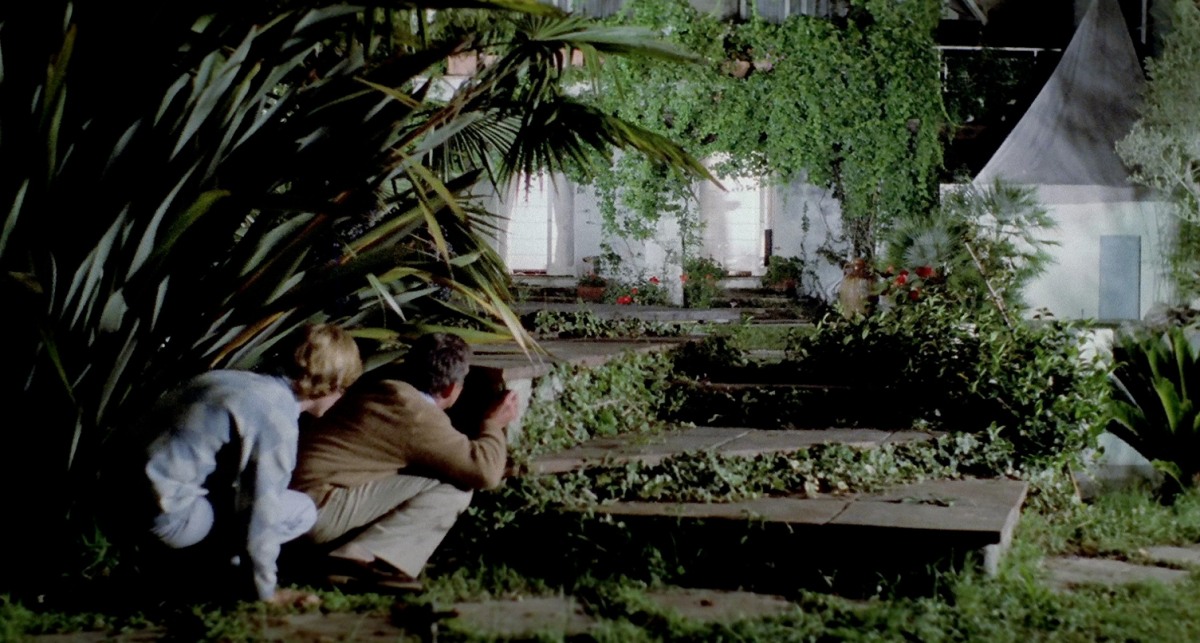
Director Dario Argento is one of the masters of giallo, an Italian genre of vividly stylized horror movies. At a screening of Tenebrae (also spelled Tenebre) in 2022, Argento said: “I get asked all the time: What is an Italian giallo? My answer is: this film. Look at it, and you’ll see exactly what we mean.”
Argento was hounded by media criticism of the violence in his movies (especially against women), and eventually a fan started calling him on the phone making those criticisms — and death threats. Argento channeled that disturbing experience into Tenebrae, in which police ask a murder mystery novelist, Peter Neal (played by American actor Anthony Franciosa), to help them track down a serial killer who keeps killing women and leaving behind clues that his or her inspiration is coming from Neal’s work.
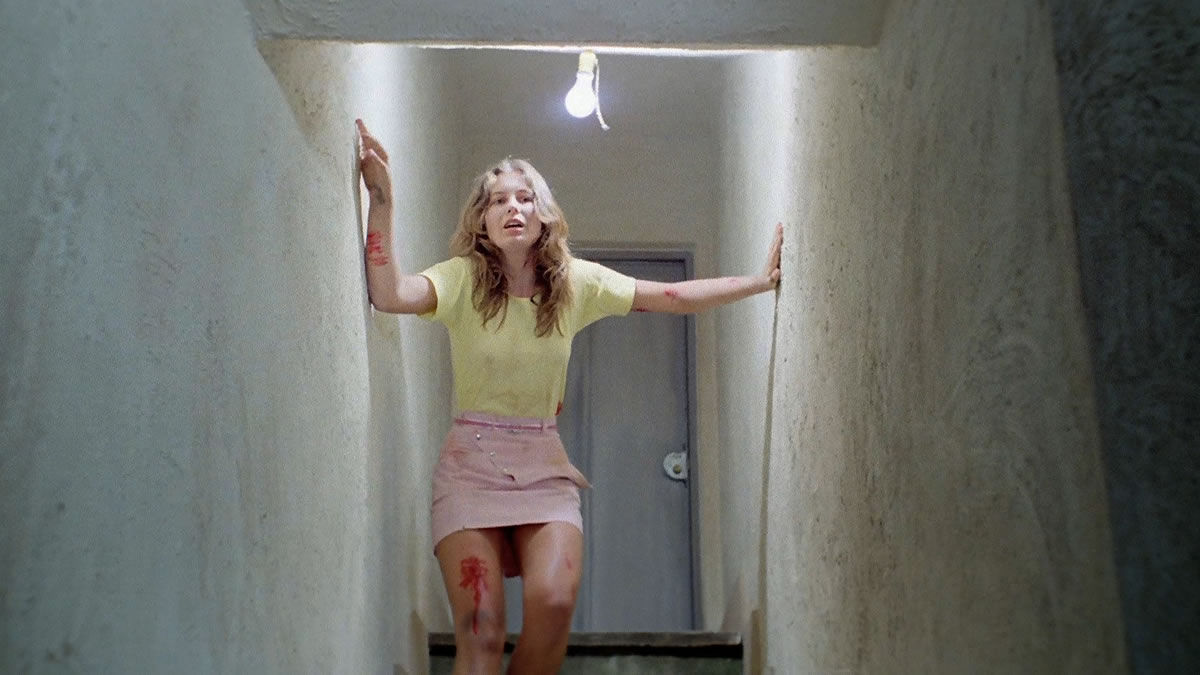
Tenebrae uncomfortably juxtaposes eroticism with brutality, and the movie’s look and sound merge luxury with madness. Sleek ’80s modernism and brightly colored, wide-open spaces give way to claustrophobic interiors and deep-red blood. And as you can hear in this trailer, an arresting, incessantly pulsating synth soundtrack captures the obsession at the heart of Tenebrae:
Stream Tenebrae on Tubi (free with ads), Plex (free with ads), or these sites.
(Andre Gregory, Wallace Shawn. Directed by Louis Malle.)
Why do we require a trip to Mount Everest in order to be able to perceive one moment of reality? I mean, is Mount Everest more “real” than New York? I mean, isn’t New York “real”? … I think if you could become fully aware of what existed in the cigar store next door to this restaurant … it would just blow your brains out!
How can a movie seem impossible to label as either a “comedy” or a “drama,” while being as funny and dramatic as My Dinner with Andre?
Someone asked me the other day if I could name a movie that was entirely devoid of clichés. I thought for a moment, and then answered, “My Dinner With Andre.” Now I have seen the movie again … and I am impressed once more by how wonderfully odd this movie is, how there is nothing else like it. It should be unwatchable, and yet those who love it return time and again, enchanted.
(Jack Nicholson, Shelley Duvall, Scatman Crothers, Danny Lloyd. Directed by Stanley Kubrick.)
I have mixed feelings about The Shining. It’s not “my kind of movie” — I usually avoid movies that involve the supernatural or telepathy. But Kubrick’s seminal horror movie about a father/husband who becomes increasingly unhinged while living with his family as the skeleton staff of an isolated, mansion-like hotel that’s closed for the winter is so strikingly eerie and powerfully acted (especially by Jack Nicholson and Shelley Duvall), and leads to so many engrossing discussions about what it all means — what’s the deal with that ending? and are there ghosts in the movie? — that it would feel wrong not to include it on this list.
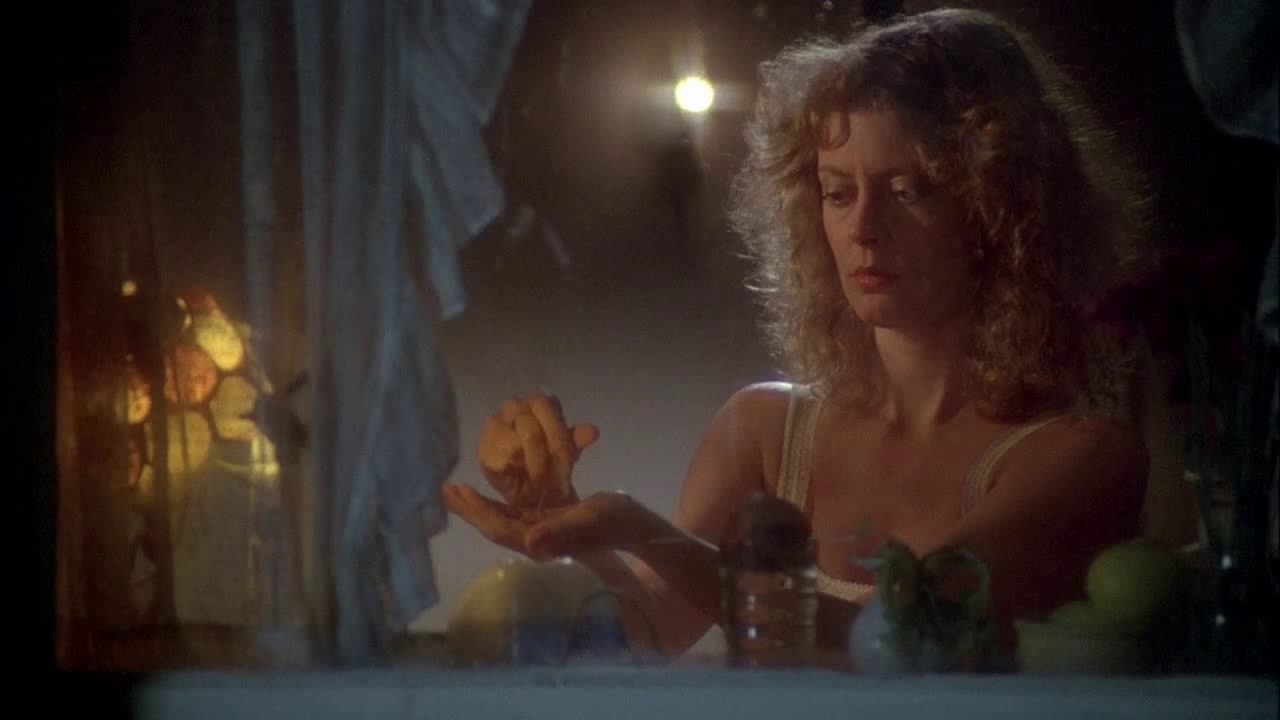
(Susan Sarandon, Burt Lancaster. Directed by Louis Malle.)
Susan Sarandon (in one of her early roles) and Burt Lancaster (in a late role, long after he starred in 1940s film noirs) were nominated for Oscars for Best Actress and Actor for this movie, in which they both give performances of great emotional range and subtlety.
Atlantic City shows gambling, drugs, and crime in a hollowed-out city, without ever moralizing against — or glamorizing — any of that, because the movie refuses to build anyone up into something more evil — or more heroic — than they truly are. The characters are pathetic, but many of them have sweet sides. We wouldn’t want to be them, but we’re glad we briefly get to know them.
I recommend Atlantic City to anyone who likes Boogie Nights (1997) but would also be open to something less glitzy, more gritty.


.jpg)

.jpg)