(Natalie Wood, Robert Culp, Elliott Gould, Dyan Cannon. Directed by Paul Mazursky.)
I think your hair is ridiculous. It’s silly.
That’s gorgeous, man. The truth is always beautiful.
Going into this movie for the first time, I was expecting it to be a frivolous and dated ’60s “sex comedy” about “wife swapping” (that sexist phrase). Bob & Carol & Ted & Alice turned out to be more interesting and moving than I could’ve imagined. It is very much “of its time”; as Quentin Tarantino says in the video below, this movie would’ve been unthinkable just a few years earlier, and if it had come out a few years later “it would look completely different.” But is it “dated”? No, the movie has held up well because of the quality of the writing, acting, and directing, and because it deals with issues that still matter to us, like: Are traditional norms about marriage worth preserving, or do they needlessly hold us back from getting in touch with our true feelings?
Natalie Wood plays Carol. The actors who play Ted (Elliott Gould) and Alice (Dyan Cannon) were nominated for Oscars for Best Supporting Actor and Actress.
A question to consider while watching: Who’s the most important character, Bob or Carol or Ted or Alice?
This is the Tarantino video I mentioned. First he gives his general thoughts on Bob & Carol & Ted & Alice, which he calls “one of my favorite movies”; after 5:30, he reacts during a break in the middle of the movie; and at 11:45 he starts talking about the ending.
This is another Wiseman documentary; I described his general approach in my post on High School (1968) (scroll down in that post).
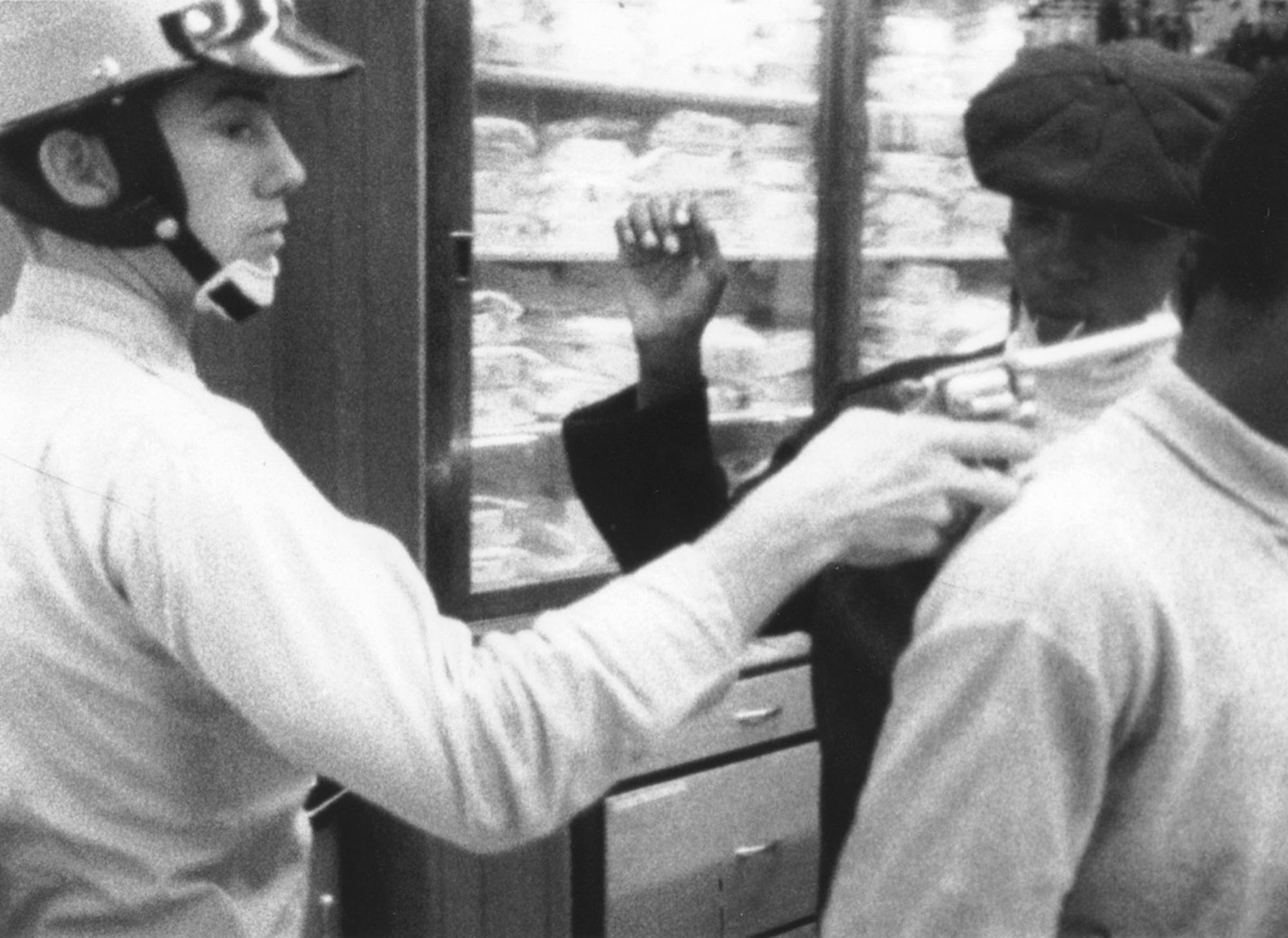
Law and Order focuses on the Kansas City Police Department in Missouri in 1968. Many who interact with the police are black, while the police force seems to be almost all white.
That video is the most striking scene of the movie. Police officers enter a building where they find a young black woman, who seems to be alone and not bothering anyone. One officer immediately starts choking her, and she makes clear she can’t speak while the police ask her a barrage of questions. After the police finally stop choking her, she politely answers their questions, calling the officers “Sir” and admitting that she was using a room in the building for prostitution. When she complains about the choking, an officer cheerfully responds: “He wasn’t choking! You’re imagining!”
The police did all that, even knowing they were being filmed for a documentary.
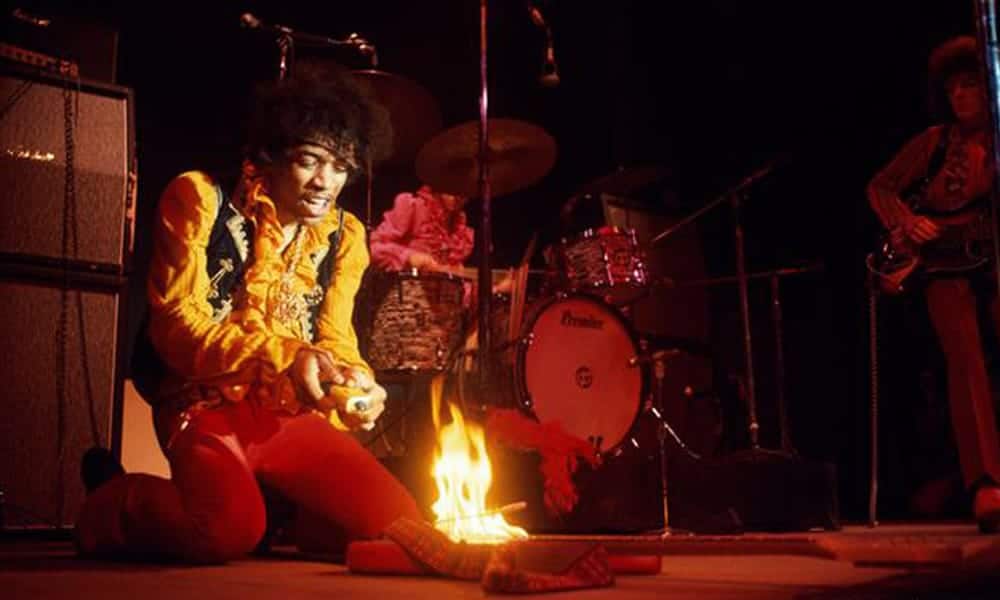
Janis Joplin singing “Ball and Chain” makes for a dramatic movie scene. Watch for Mama Cass of the Mamas & the Papas in the audience, looking on in awe in the video below (at 3:28 and 5:26):
You can stream it on the Criterion Channel (with bonus features including Hendrix’s full set) or Max. If you don’t subscribe to the Criterion Channel, try a free trial.
It was my good fortune to visit the film set, in a small hill town an hour or so outside Rome, on the night when the balcony scene was filmed. I remember Hussey and Whiting upstairs in the old hillside villa, waiting for their call, unaffected, uncomplicated. And when the balcony scene was shot, I remember the heedless energy that Hussey threw into it, take after take, hurling herself almost off the balcony for hungry kisses. (Whiting, balanced in a tree, needed to watch his footing.) …
Zeffirelli said what was obvious: That the whole movie depended on the balcony and the crypt scenes, and he felt now that his casting decision had proven itself, and that the film would succeed. It did, beyond any precedent for a film based on Shakespeare. … The movie opened in the tumultuous year of 1968, a time of political upheaval around the world, and somehow the story of the star-crossed lovers caught the mood of rebellious young people who had wearied of their elders’ wars.
Frederick Wiseman, the prolific documentarian, is strict about using only raw footage of everyday life with nothing added: no interviews, no narration, no explanatory text. A Wiseman documentary makes you feel like a fly on the wall within an institution or occupation. The goal isn’t to tell a story from beginning to end, but to give you a sense of what it’s like to be there for one day.
Virtually everything in High School, a savagely comic portrait of a “good” public high school in Philadelphia, gathers around a few central ideas: the school’s use of banality to control the students, the suppression of the student’s sexuality and independence. The movie begins with a teacher starting her class by reading the “thought for the day” (“What I do today is going to change my life tomorrow”). … The “thought for the day” is banal, but it is also appalling, for we realize that it is the school, not the students themselves, that is trying to change their lives. …
[I]n the final sequence, … the principal … reads to the faculty a letter from a recent graduate, a boy expecting to die in Vietnam. “Don’t worry about me,” the boy writes. “I’m just a body doing a job.” Everywhere in the school, in the classrooms and administrative offices and in the long hallways, we have seen the omnipresent teachers and school officials, frightened and rule-bound, trying to turn out teenagers who will submit to authority. In this case they have apparently succeeded. The boy, in words of self-negation that the principal applauds, has surrendered to the school even the meaning of his own death.
The student who wrote that letter did, as he anticipated, die in the Vietnam War. The principal informing the faculty of that terrible news does not do so in a disturbed or even somber tone, but seems to be beaming with pride while announcing the details of his life insurance payout.
In other scenes, authority figures convey questionable attitudes about sex and gender to students. A male teacher tells a student that a dress she wore to the prom was too short:
We’re going to do in this school what the majority wants. … It’s nice to be individualistic, but there are certain places to be individualistic.
I didn’t mean to be individualistic.
No, I’m not criticizing. … This is offensive to the whole class.
A female teacher then tries to support him by saying: “I have to wear a long gown. I love to! And I can’t walk in it! I can’t get in a car comfortably!”
But this isn’t a simplistic documentary that demonizes the school at every turn. In this scene, Simon & Garfunkel’s song “The Dangling Conversation” is taught as poetry by a teacher who’s clearly trying to reach and inspire students:
In a 2016 Oscar acceptance speech, Wiseman (who’s still making documentaries in his 90s) revealed his method:
I usually know nothing about the subject when I start. And I know there are those who feel I know nothing about it when it’s finished. I never start with a point of view about the subject or a thesis that I want to prove. I also don’t do any research in advance of the shooting. I usually don’t know in advance what’s going to be shot or what I’m going to stumble across. …
I think it’s as important to document kindness, civility, and generosity of spirit as it is to document cruelty, banality, and indifference.
Shame[Swedish: Skammen]
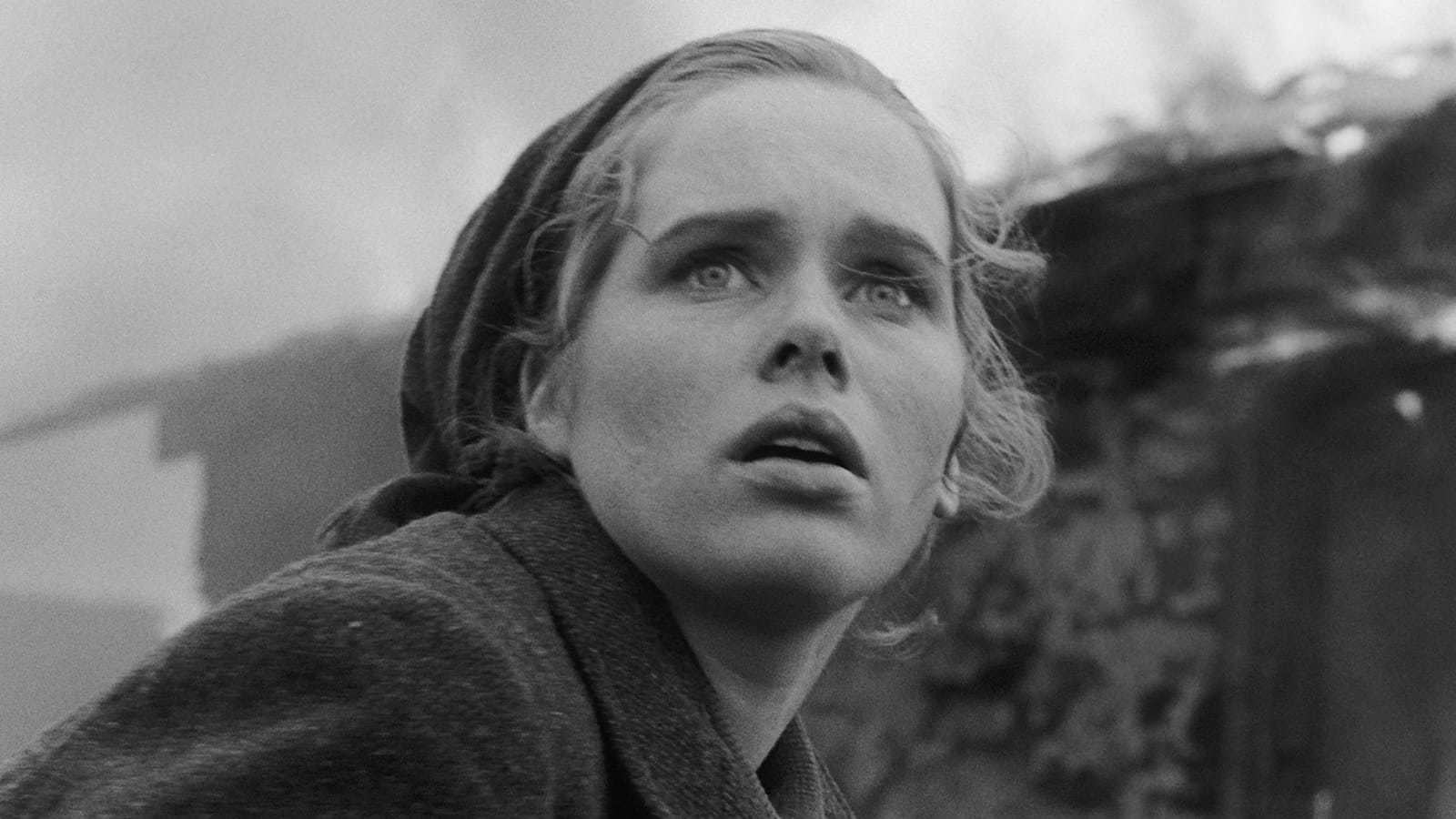
(Liv Ullmann, Max von Sydow, Gunnar Björnstrand. Directed by Ingmar Bergman.)
Ingmar Bergman’s only anti-war movie. The leading woman, Liv Ullmann (who was in a relationship with Bergman at the time and had a child with him) said in an interview on the Criterion blu-ray and DVD: “Ingmar was scared of war. He was scared less of what it would do in terms of killing, destroying people, more so what it would do with their souls, with their human ability, with who they really were.”
The relentless, Kafkaesque backdrop of a never-ending war puts a troubled marriage into stark relief. … Eva and Jan Rosenberg [Ullman and Max von Sydow], former classical violinists, have moved to a remote island to escape the civil war ravaging their unnamed country. They eke out a living selling produce they grow on their small farm. … The movie picks up with the couple shortly before shock troops surge in from the sea. … Jan devolves into a cold-blooded killer determined to survive at any cost. …
In Shame, a movie about two musicians, music is often mentioned but never heard, because their lives are bereft of music and so much else.
Shame never specifies the location or the war we’re seeing. The effect is to leave us feeling that this could be any war, that its devastating effects on this couple could happen to anyone, and that it barely matters which side is which.
Sometimes everything seems just like a dream. It’s not my dream, it’s somebody else’s, but I have to participate in it. How do you think someone who dreams about us would feel when he wakes up … ashamed?
Stream Shame on the Criterion Channel (with extras). If you don’t subscribe, try a free trial. If you want to own it, you could buy Criterion’s set of 39 Bergman movies
in the Barnes & Noble 50% off sale on all Criterion movies, which
happens every July and November. (Amazon sometimes lowers prices at the same time.) I have the set — an amazing
deal at less than $4 per blu-ray.
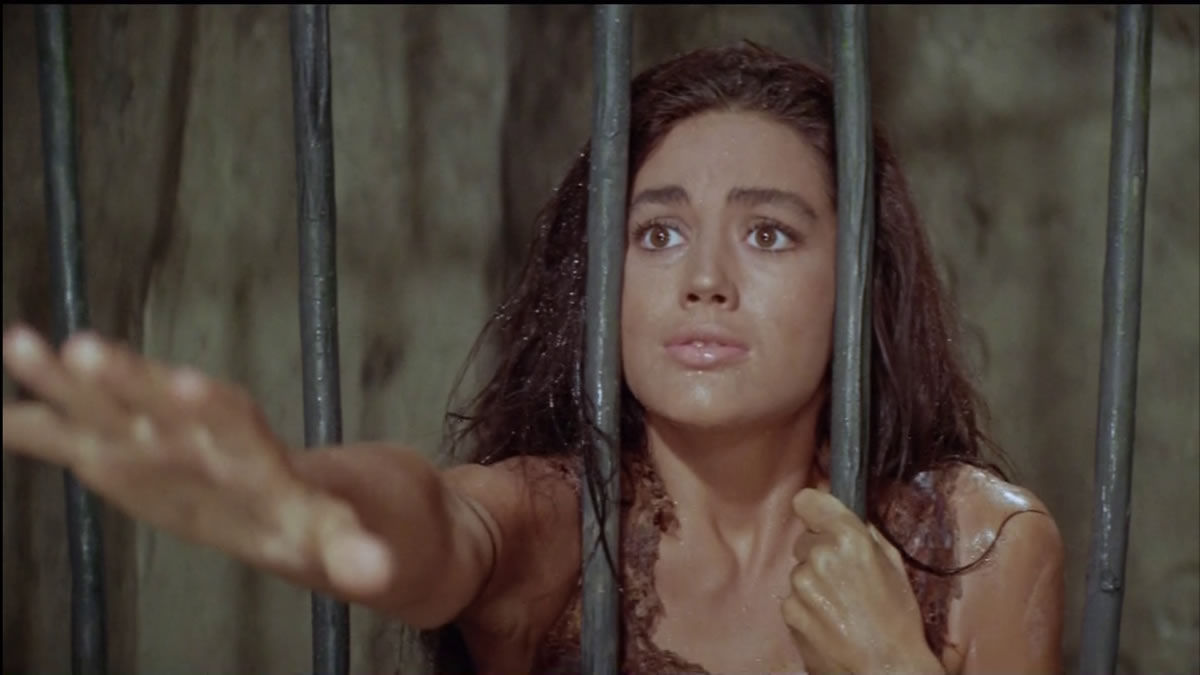
(Charlton Heston, Roddy McDowall, Kim Hunter, Maurice Evans, James Whitmore. Directed by Franklin J. Schaffner.)
As you can see in that video clip, the original Planet of the Apes movie shows us a world where apes lead a purportedly civilized society and have trouble believing that an animalistic human species could be intelligent. Co-written by The Twilight Zone’s Rod Serling, this sci-fi adventure movie is both fun and meaningful. I recommend watching it along with The Time Machine (one of my favorite movies of 1960) and Island of Lost Souls (one of my favorites of 1932).
Planet of the Apes begins with an astronaut crew traveling far through space and time. Charlton Heston, who gives a famous performance as the lead astronaut, has the first words of the movie:
And that completes my final report until we reach touchdown. We’re now on full automatic, in the hands of the computers. … The men who sent us on this journey are long since dead and gone. You who are reading me now are a different breed — I hope a better one. I leave the 20th century with no regrets. But one more thing — if anybody’s listening, that is. … Does man, that marvel of the universe, that glorious paradox who sent me to the stars, still make war against his brother, keep his neighbor’s children starving?
(Alain Delon, Nathalie Delon, Cathy Rosier, François Périer. Directed by Jean-Pierre Melville.)
This neo-noir about a hitman (Alain Delon) is set in Paris, but not the charmingly sophisticated Paris of so many movies. This is a cold, amoral world of faded colors and muted emotions.
The elements of the film — the killer, the cops, the underworld, the women, the code — are as familiar as the movies themselves. Melville loved 1930s Hollywood crime movies and in his own work helped develop modern film noir. There is nothing absolutely original in “Le Samouraï” except for the handling of the material. Melville pares down and leaves out. He disdains artificial action sequences and manufactured payoffs.
Ebert concluded his review by saying Melville “has been able to keep constantly in mind his hero’s chief business.” I take that to mean that instead of the exciting, glamorized presentation of career criminals we’re used to seeing in movies, Le Samouraï lets us feel how grim and draining it is to devote your life to death.
The ending of Le Samouraï is the best part, and the most confusing part. I had trouble understanding it, but here are some theories (full of spoilers, of course).
Video analysis of the movie (spoils the ending more than 5 minutes in):
(Bibi Andersson, Liv Ullmann, Gunnar Björnstrand. Directed by Ingmar Bergman.)
For most of Bergman’s Persona we see no one other than two women (Bibi Andersson and Liv Ullmann) … but some of the exceptions seem to disrupt the whole medium of film! One of the women is supposedly mute, but from the beginning we have doubts about her condition, and by the end we’ll have doubts about more than that.
Characterized by elements of psychological horror, Persona has been the subject of much critical analysis, interpretation and debate. The film’s exploration of duality, insanity and personal identity has been interpreted as reflecting the Jungian theory of persona and dealing with issues related to filmmaking, vampirism, homosexuality, motherhood, abortion and other subjects. …
[T]he filmmakers experimented with effects, using smoke and a mirror to frame one scene and combining the lead characters’ faces in post-production for one shot. Andersson defended a sexually explicit monologue in the screenplay, and rewrote portions of it.
You know what I thought after I saw a film of yours one night? When I got home and looked in the mirror, I thought: we look alike. … I think I could turn into you if I really tried, I mean inside. You could be me just like that, though your soul would be far too big — it would stick out everywhere!
Stream it on the Criterion Channel (with bonus features) or Max. If you don’t subscribe to the Criterion Channel, try a free 14-day trial. If you want to own it, you could buy Criterion’s set of 39 Bergman movies
in the Barnes & Noble 50% off sale on all Criterion movies, which happens every July and November. I have the set — an amazing
deal at less than $4 per blu-ray. (Amazon often lowers prices during those sales.)
The Shop on Main Street[Slovak: Obchod na Korze]
(Jozef Kroner, Ida Kamińska, Hana Slivková, František Zvarík, Martin Gregor, Martin Hollý, Sr. Directed by Ján Kadár, Elmar Klos.)
An inept Slovak peasant is torn between greed and guilt when the Nazi-backed bosses of his town appoint him “Aryan controller” of an old Jewish widow’s button shop. Humor and tragedy fuse in this scathing exploration of one cowardly man’s complicity in the horrors of a totalitarian regime.
Stream it on the Criterion Channel or Max. If you don’t subscribe to the Criterion Channel, try a free 14-day trial. Or you can buy the Criterion DVD (no blu-ray) in the Barnes & Noble 50% sale on all Criterion movies for the rest of July 2021 (and Amazon has been reducing some prices in response).
It was clear from the outset that “A Hard Day’s Night” was in a different category from the rock musicals that had starred Elvis and his imitators. It was smart, it was irreverent, it didn’t take itself seriously, and it was shot and edited by Richard Lester in an electrifying black-and-white, semi-documentary style that seemed to follow the boys during a day in their lives. And it was charged with the personalities of the Beatles, whose one-liners dismissed the very process of stardom they were undergoing. …
The most powerful quality evoked by “A Hard Day’s Night” is liberation. The long hair was just the superficial sign of that. An underlying theme is the difficulty establishment types have in getting the Beatles to follow orders. (For “establishment,” read uptight conventional middle-class 1950s values.) Although their manager (Norman Rossington) tries to control them and their TV director (Victor Spinetti) goes berserk because of their improvisations during a live TV broadcast, they act according to the way they feel. …
When Ringo grows thoughtful, he wanders away from the studio, and a recording session has to wait until he returns. When the boys are freed from their “job,” they run like children in an open field, and it is possible that scene (during “Can’t Buy Me Love”) snowballed into all the love-ins, be-ins and happenings in the park of the later ’60s. The notion of doing your own thing lurks within every scene. …
In his opening sequence, which shows the Beatles mobbed at a station as they try to board a train, Lester achieves an incredible energy level: We feel the hysteria of the fans and the excitement of the Beatles, intercut with the title song (the first time movie titles had done that), implying that the songs and the adulation were sides of the same coin. …
More from Ebert’s review:
Lester did not invent the techniques used in “A Hard Day’s Night,” but he brought them together into a grammar so persuasive that he influenced many other films. Today when we watch TV and see quick cutting, hand-held cameras, interviews conducted on the run with moving targets, quickly intercut snatches of dialogue, music under documentary action and all the other trademarks of the modern style, we are looking at the children of “A Hard Day’s Night.”
The film is so tightly cut, there’s hardly a down moment, but even with so many riches, it’s easy to pick the best scene: The concert footage as the Beatles sing “She Loves You.” This is one of the most sustained orgasmic sequences in the movies. … (My favorite audience member is the tearful young blond, beside herself with ecstasy, tears running down her cheeks, crying out “George!”) …
The innocence of the Beatles and “A Hard Day’s Night” was of course not to last. … The Beatles would go through a long summer, a disillusioned fall, a tragic winter. But, oh, what a lovely springtime.
Stream A Hard Day’s Night on the Criterion Channel (with extras including interviews with the Beatles and commentary) or Max. If you don’t subscribe to the Criterion Channel, try a free trial.
Have you ever seen a commie drink a glass of water? … Vodka, that’s what they drink, isn’t it? Never water. … Water is the source of all life. … Why, do you realize that 70% of you is water? And as human beings, you and I need fresh, pure water to refresh our precious bodily fluids. … Do you realize that fluoridation is the most monstrously conceived and dangerous communist plot we have ever had to face?
Here are 17 facts about Dr. Strangelove. The last one is: the movie was seen as such a compelling warning that it led to real changes in US foreign policy.
The Fire Within[French: Le Feu Follet]
(Maurice Ronet, Jeanne Moreau, Jean-Paul Moulinot, Alexandra Stewart. Directed by Louis Malle.)
The director, Louis Malle, required Maurice Ronet to lose 45 pounds to play Alain, a recovering alcoholic on the verge of suicide as he struggles to relate to people. Malle apparently felt a deep bond with that character: he cast his close friend in the role, dressed him in Malle’s own clothing, and even gave him Malle’s own gun.
Stream The Fire Within on the Criterion Channel (with bonus features, including interviews with Malle and others — which are the sources for the information above). If you don’t subscribe, try a free trial.
The first half of High and Low is surprisingly confined to a rich family’s living room. The movie keeps throwing you off: at first it seems to be a corporate drama about men vying for control over a shoe company, but then the head of the company (Toshiro Mifune) gets a phone call from a kidnapper. The CEO is plunged into a moral dilemma about whether to comply with the kidnapper’s demands, possibly at the expense of his position at the company. You sense that this man — who lives up high on a hill, takes pride in his work, and is respected by the community — has never felt so powerless. He seems like he could go crazy. The truly crazy person is the kidnapper, whose motive turns out to be … air conditioning???
I puzzled over the social commentary of this movie. I couldn’t figure out if the message was supposed to be more left/liberal or right/conservative. The video below (which has a spoiler alert) suggests that the most obvious political take on High and Low might not be the correct one.
High and Low isn’t all black and white — figuratively or literally!
Stream High and Low on Max or the Criterion Channel, which has bonus features including an insightful commentary track that explains how the movie was shaped by contemporary Japanese society, and clarifies what I said about air conditioning. If you don’t subscribe to the Criterion Channel, try a free trial.
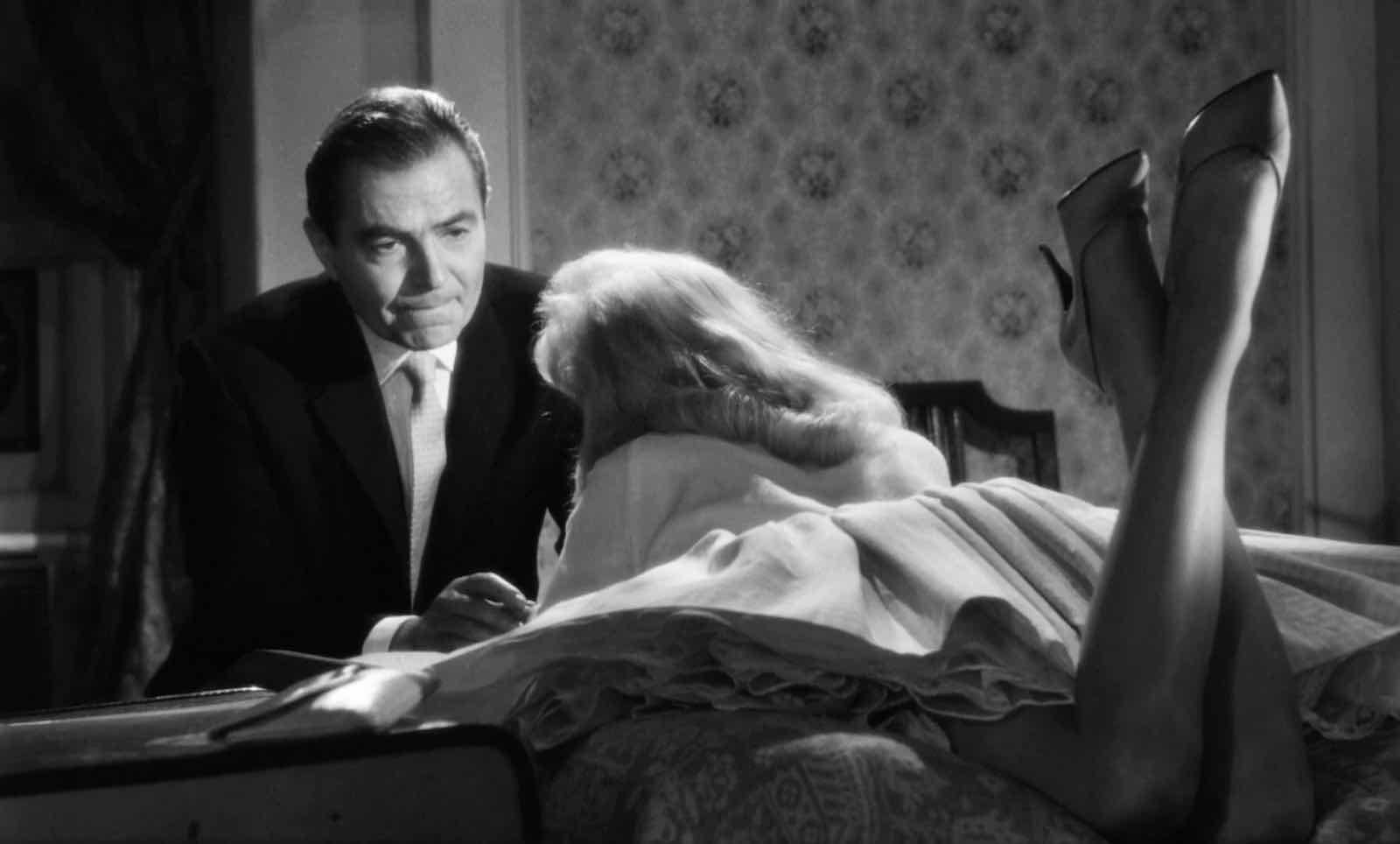
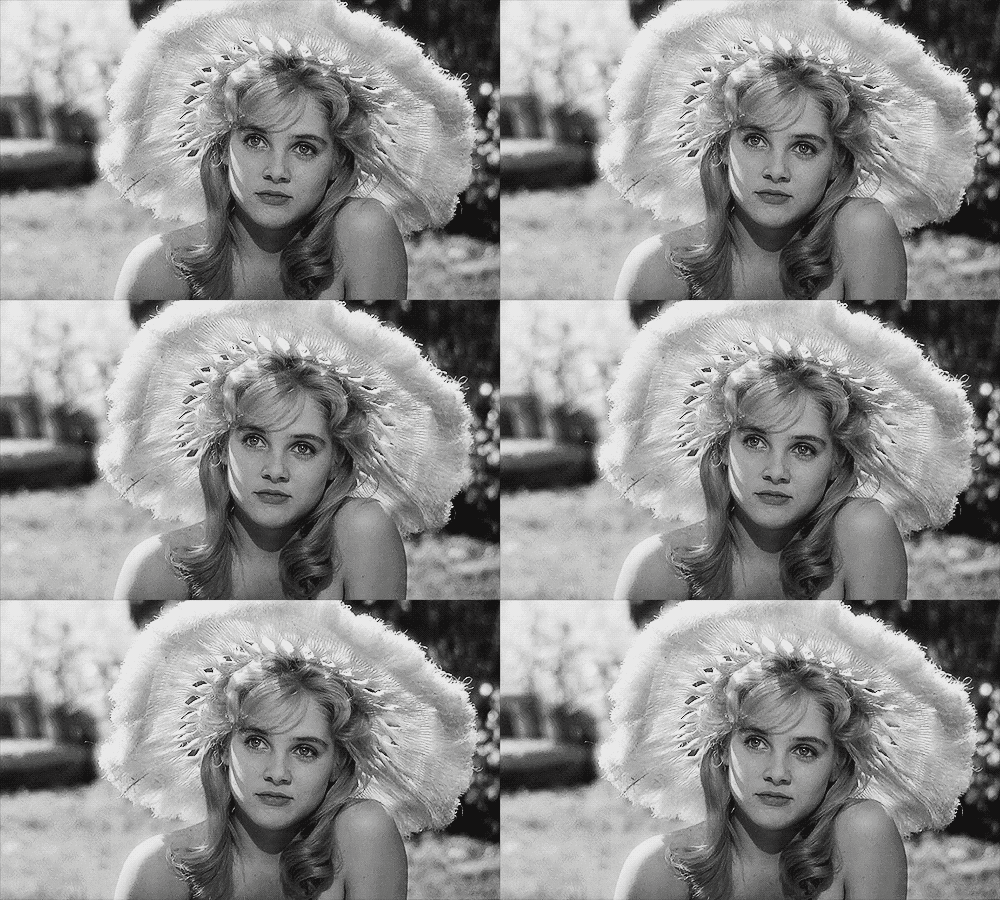
Lolita(James Mason, Sue Lyon, Peter Sellers, Shelley Winters. Directed by Stanley Kubrick.)
This movie’s trailer asked: “How did they ever make a movie of Lolita?” In other words, how was it possible to adapt Nabokov’s 1955 novel about a man who sexually abuses his 12-year-old stepdaughter, considering how heavily censored movies were back in 1962?
First, they made her older, a high-school student. Then, Kubrick made a dark comedy-drama that avoids being overtly sexual or erotic, instead focusing on the often-disconcerting interactions among four fascinating characters:
• James Mason is a middle-aged professor who becomes creepily obsessed with a teenage girl.
• Sue Lyon is the girl who’s preyed upon but asserts her will.
• Shelley Winters is the desperate, melodramatic, beleaguered mother and wife.
• Peter Sellers steals the show as the elusive man who keeps popping up in unexpected places, adopting a variety of comically incongruous personas.
I said to myself when I saw you, I said, “That’s a guy with the most normal-looking face I ever saw in my life!” … It’s great to see a normal face, because I’m a normal guy. It’d be great for two normal guys like us to get together and talk about world events — you know, in a normal sort of way.
(James Stewart, John Wayne, Lee Marvin, Vera Miles, Edmond O’Brien, Andy Devine, Woody Strode. Directed by John Ford.)
Like Double Indemnity (my favorite movie of 1944), The Man Who Shot Liberty Valance is told mostly in flashback, and it partly spoils itself at the beginning, leaving us intrigued to find out the whole story.
From the beginning, we know that Jimmy Stewart’s character, Ransom “Ranse” Stoddard, has ended up as a respected Senator, while John Wayne’s character, Tom Doniphon, has died decades after the main events of the movie. We also know that Doniphon is unknown to the general public but revered by the Senator and others who knew him. Of course, the title of the movie tells us that Liberty Valance (Lee Marvin) will be shot. But what does any of this have to do with the heated debate over whether their territory in the 19th century should become a state?
The Man Who Shot Liberty Valance probably had to come out right around the time it did. If it had come out 10 years earlier, it would’ve had more of the look and feel of a classic Western; instead, it’s a “revisionist Western” that feels more world-weary and self-conscious about its own genre and setting and myth-making. (The movie’s most famous line is: This is the West, sir. When the legend becomes fact, print the legend.) But it also came out early enough for World War II to be in recent memory, underlying the movie’s subtext about those who take up arms for a just cause. The movie might not have gone over so well had it come out a little later, during the protests against the Vietnam War.
This is a rare movie where the title is said only by a bit player. The title drop resonated with me long after watching it.
Watch Mia Tiffany watching The Man Who Shot Liberty Valance for the first time:
Stream The Man Who Shot Liberty Valance on Amazon Prime.
(Jean-Paul Belmondo, Serge Reggiani, Fabienne Dali, Philippe Nahon, Michel Piccoli. Directed by Jean-Pierre Melville.)
This French noir is by Jean-Pierre Melville, who would later direct Le Samouraï (my favorite movie of 1967). Le Samouraï is the better-known movie, but Le Doulos is more overtly entertaining, with a plot that keeps us guessing about who can be trusted while the body count keeps piling up. It seems easier to spot a liar than a truth-teller in the murky underworld of Le Doulos.
The movie starts by telling us that the title Le Doulos literally refers to a hat, but it’s police lingo for an informant. Le Doulos keeps us asking questions like: who’s informing, and what’s the information, and why?
Le Doulos is both fun and challenging to watch. There’s a lot to keep track of, and I didn’t catch it all the first time. But the challenge is worth it; this is an engaging and outstanding crime movie.
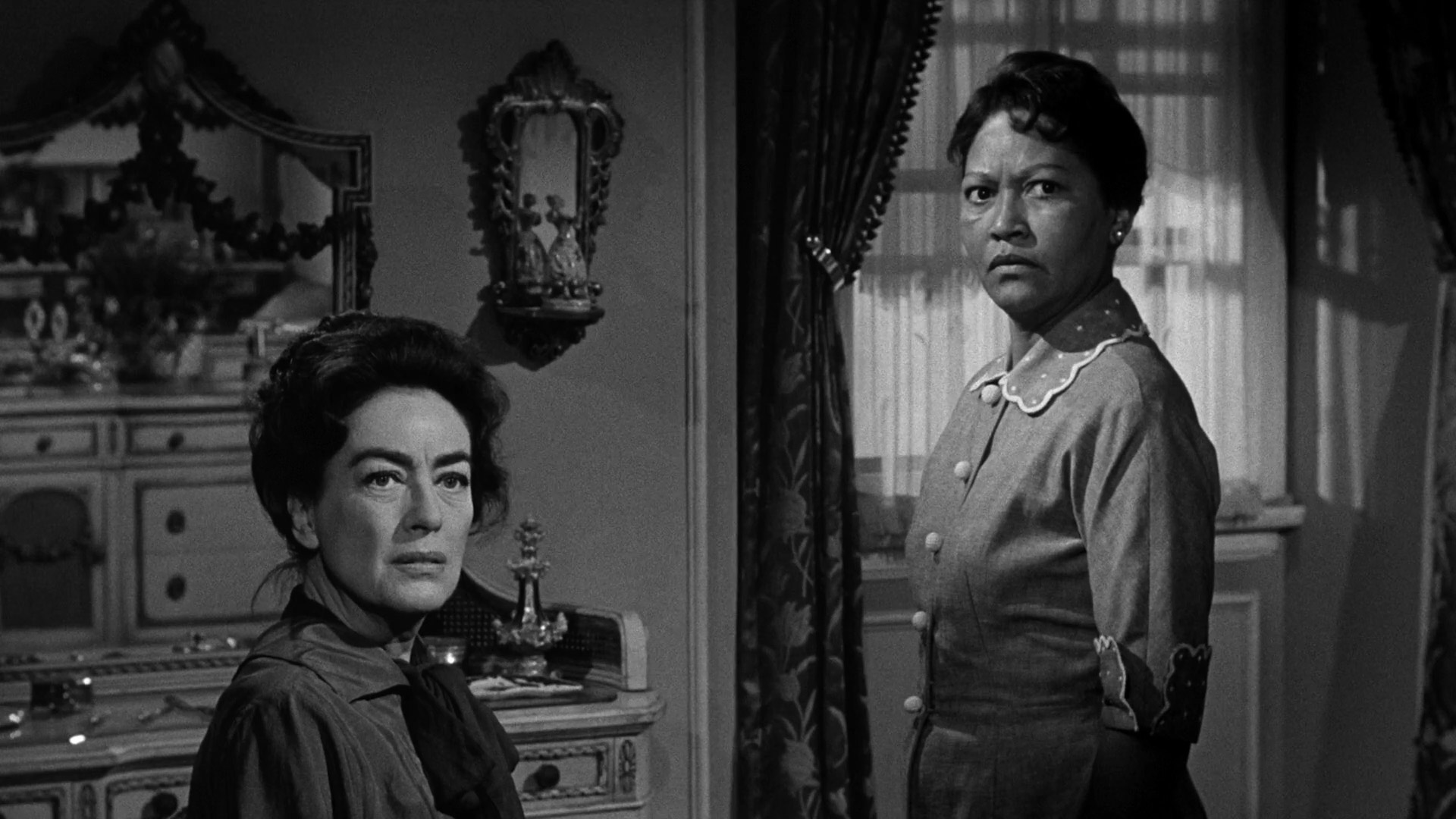
(Bette Davis, Joan Crawford, Victor Buono, Maidie Norman. Directed by Robert Aldrich.)
What Ever Happened to Baby Jane? stars real-life rivals Bette Davis and Joan Crawford. Bette Davis plays Jane Hudson, an alcoholic who mourns her former stardom that burnt out in childhood. She’s insanely jealous of her sister, Blanche Hudson, played by Joan Crawford, who grew up to outshine Jane as a glamorous young Hollywood star. (We see movie clips of the real Joan Crawford and Bette Davis in their younger days.) Decades later, Blanche is in a wheelchair, being held hostage by Jane on the second floor of their house. The result is like a combination of Sunset Boulevard (one of my favorite movies of 1950) and Misery (one of my favorites of 1990) … with a devious twist that I won’t give away.
Maidie Norman, a black actress who plays their maid, objected that her dialogue was written in the screenplay as a “doltish, yessum character” who spoke in “old slavery-time talk.” She rewrote her own dialogue to be strong and smart, but she wasn’t credited as a writer.
Seinfeld paid tribute to What Ever Happened to Baby Jane? in the season 4 episode “The Airport.” But ya are, Blanche!
Watch Mia Tiffany watching What Ever Happened to Baby Jane?:
Stream What Ever Happened to Baby Jane? on these sites.
Through a Glass Darkly[Swedish: Såsom i en Spegel]
(Harriet Andersson, Gunnar Björnstrand, Max von Sydow. Directed by Ingmar Bergman.)
This Bergman movie takes place entirely on a remote island and has only four characters, all family members. It was the beginning of Bergman’s “silence of God” trilogy: three movies that don’t share any characters but all “examine the necessity of religion and question the promise of faith.” This video talks about the trilogy with a focus on Through a Glass Darkly:
Another video analyzing the movie (from Learning About Movies, a YouTube channel by Dr. Josh Matthews):
The only woman in Through a Glass Darkly struggles with a mental illness which isn’t specified, but Harriet Andersson prepared for the role by consulting with a psychiatric nurse on schizophrenia. The movie culminates in her intense experience of God in a shocking form.
Harriet Andersson, who was in several Bergman movies (including my top choice for 1953 and one of my choices for 1955), is one of my favorite living actresses. I like how she’s both consistent and inconsistent. She’s consistently excellent. But she’s inconsistent in that from one movie to the next, she truly seems like a different person. She doesn’t fall back on playing the same character from an earlier movie, the way many actors do to please audiences. She takes risks and keeps surprising us.
Stream Through a Glass Darkly on the Criterion Channel (with bonus features) or Max. If you don’t subscribe to the Criterion Channel, try a free 14-day trial. If you want to own the whole trilogy, you could buy the Criterion blu-ray set in the Barnes & Noble 50% off sale every July and November (and Amazon might lower some prices at those times in response). Or get it as part of Criterion’s set of 39 Bergman movies (I own that set — a great deal at less than $4 per blu-ray).
3rd favorite of 1961:
Breakfast at Tiffany’s(Audrey Hepburn, George Peppard, Mickey Rooney. Directed by Blake Edwards.)
This movie has plenty of flaws, from the leading man’s blandly inoffensive performance … to Mickey Rooney’s crudely offensive ethnic caricature of a Japanese landlord … to the meandering plot. So I was unsure whether to include it. But as I said in the “rules” for this list: “whenever I found it hard to choose between two movies, I asked myself: which one would I be more enthusiastic about rewatching more times in the future?” Despite its shortcomings, Breakfast at Tiffany’s succeeds at one thing: making us fall in love with Audrey Hepburn, and that’s reason enough to watch it again and again.
It’s a mistake you always made … trying to love a wild thing. You were always lugging home wild things. Once it was a hawk with a broken wing, and another time it was a full-grown wildcat with a broken leg, remember? You mustn’t give your heart to the wild things! The more you do, the stronger they get, until they’re strong enough to run into the woods or fly into a tree, and then to a higher tree, and then the sky!
It’s also reminiscent of Obsession (one of my faves of 1949), with the villain who slowly and elaborately torments his victim … in an elegantly British way.
The victim, played by Peter Cushing, who you’ve seen in Star Wars (1977), is the cold and severe head of the bank branch. We first see him admonishing an employee for keeping too many personal photos on her desk. Then he threatens to fire another employee, played by Richard Vernon, who would go on to play the man who sits down in a train car with the Beatles in A Hard Day’s Night (my favorite movie of 1964).
Vernon’s character is named Pearson, and his name might get us wondering if anyone in this movie is seeing the real “person” in front of them. Pearson thinks he knows what kind of person he’s dealing with when a man going by Colonel Gore Hepburn (André Morell) shows up at the bank to do a surprise inspection of their security measures. As you can see in the video above, a pivotal moment happens early in the movie when the inspector scolds Pearson for leading him directly to the bank manager without doing anything to make sure he isn’t a robber. Pearson defends his oversight by telling the inspector: “You don’t look like a gunman.”
“You don’t look like a gunman.” It’s a revealing response: Pearson assumes the man couldn’t be up to anything nefarious because … well … just look at him! We go through life assuming we can get a read on people by looking at them on the surface, but this movie questions that.
Stream Cash on Demand on Tubi (free with ads), Amazon Prime (it left but will likely come back), or these sites.
The Apartment(Jack Lemmon, Shirley MacLaine, Fred MacMurray. Directed by Billy Wilder.)
A movie about how you have to stand up for yourself.
The Apartment gets called a romantic comedy, and it is inspiring and energizing — but it also has a dark, dramatic side.
Ebert observed this about The Apartment and other Billy Wilder movies (in a review that largely gives away The Apartment’s plot):
the great Wilder pictures don’t play as period pieces but look us straight in the eye. … “The Apartment” is still tougher and more poignant than the material might have permitted. The valuable element in Wilder is his adult sensibility; his characters can’t take flight with formula plots, because they are weighted down with the trials and responsibilities of working for a living. In many movies, the characters hardly even seem to have jobs, but in “The Apartment” they have to be reminded that they have anything else.
What’s the matter?
The mirror. It’s broken.
Yes, I know. I like it that way. Makes me look the way I feel.
Psycho(Anthony Perkins, Janet Leigh, Vera Miles, Martin Balsam. Directed by Alfred Hitchcock.)
When I watch this Hitchcock movie, I like to imagine I’m seeing it in a theater back in 1960, because I long to do what’s no longer possible: to experience the full shock of how Psycho overturned audience’s expectations.
Zazie dans le Métro[French]
(Catherine Demongeot, Philippe Noiret, Carla Marlier, Annie Fratellini, Vittorio Caprioli. Directed by Louis Malle.)
A young girl (Zazie, played by Catherine Demongeot in her debut) goes on a trip to Paris wanting nothing more than to ride the subway (le Métro), which is closed because of a strike. If that sounds like the premise of a sweet coming-of-age movie where the kid starts out with naively youthful notions and ends up learning some life lessons … then get ready to have your expectations shattered along with many wine bottles and other objects in this movie.
Louis Malle’s Zazie dans le Métro makes so little sense that you feel compelled to find the sense in it. It’s so fantastically absurd that it makes us wonder if normal movies are any less absurd.
Movies are said to be an international language, but sometimes a film that is popular in one country finds only a small audience in another. This anarchistic, impudent comedy (from Raymond Queneau’s novel), a great success in France in 1960, was hardly heard of in the United States. … To Americans, Zazie seemed to go too far — to be almost demonic in its inventiveness, like a joke that gets so complicated you can’t time your laughs comfortably.
(Rod Taylor, Yvette Mimieux, Alan Young. Directed by George Pal.)
Based on a novella by H.G. Wells, The Time Machine has inspired other time travel movies including Back to the Future (my favorite of 1985). The Back to the Future trilogy has even been called a “reimagining of [The Time Machine, both the book and the movie,] for the 1980s generation” — that’s according to an academic essay called ‘There’s Something Very Familiar About All This’: Time Machines, Cultural Tangents, and Mastering Time in H.G. Wells’s The Time Machine and the Back to the Future trilogy.
Well, the future’s already there. It’s irrevocable. It cannot be changed.
I wonder. Now that’s the most important question to which I hope to find an answer: Can man control his destiny? Can he change the shape of things to come?
In this scene, the time traveler (Rod Taylor) looks for answers about the distant future:
UPDATE: A few days after I added The Time Machine as one of my favorite movies of 1960, the leading woman, Yvette Mimieux, died at age 80 on January 18, 2022. She had her breakthrough in this movie playing the poignant character of Weena, a member of the docile post-human race called Eloi.