Posts

Showing posts with the label all 1940s

my favorite movies of 1949:

(1) Gun Crazy

(2) A Letter to Three Wives

(3) Thieves’ Highway

(4) The Heiress

(5) Bitter Rice

(6) Obsession

favorite of 1949:

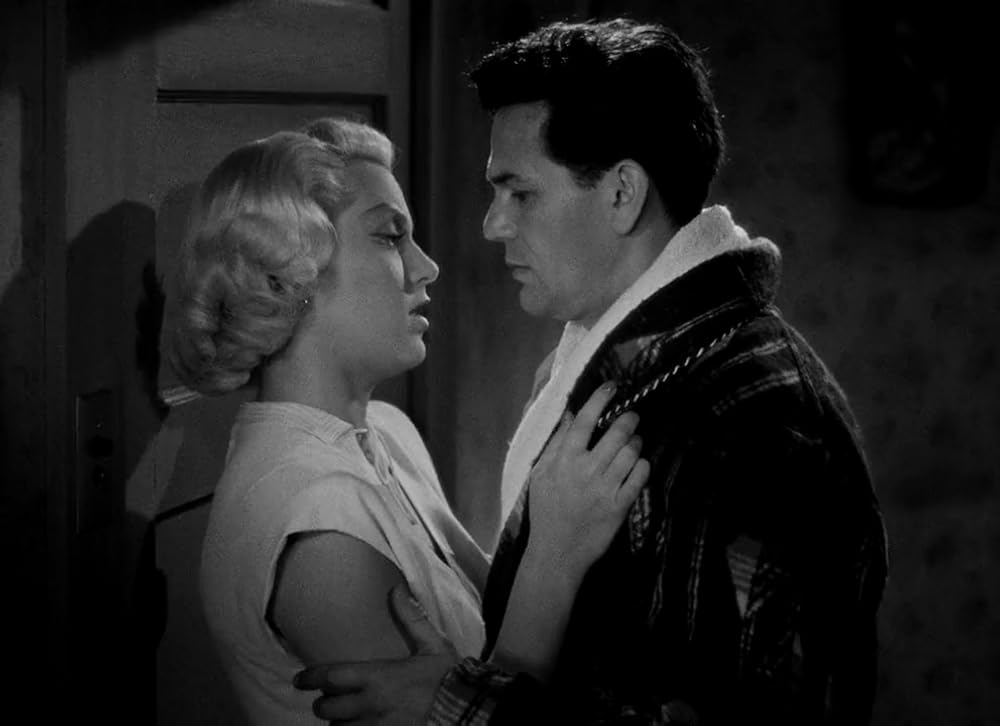
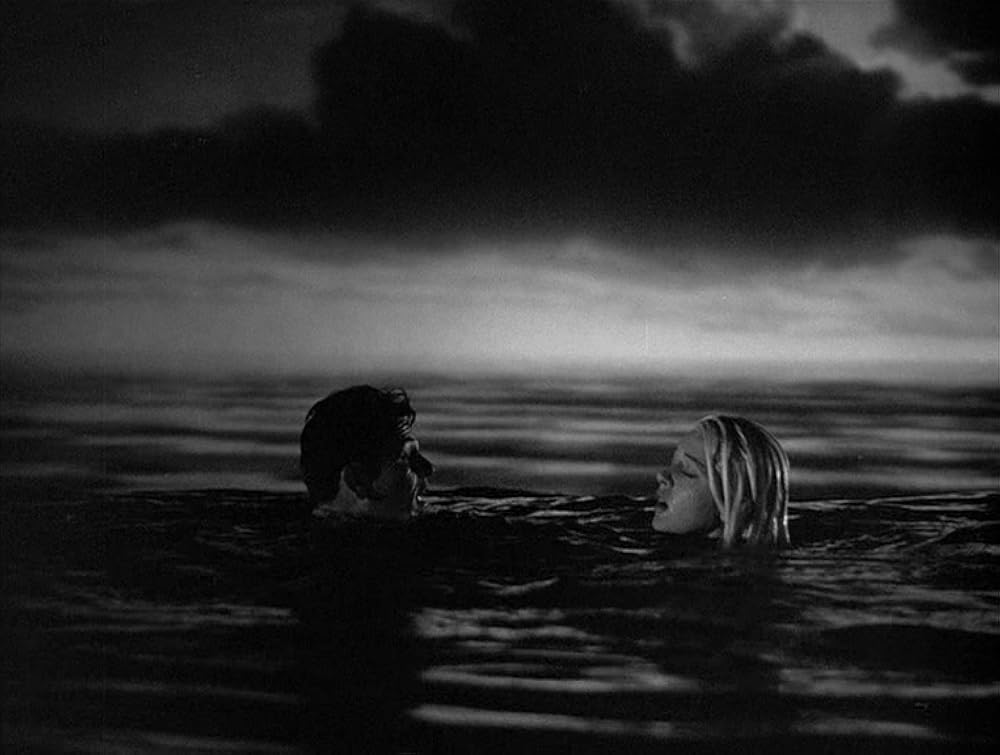
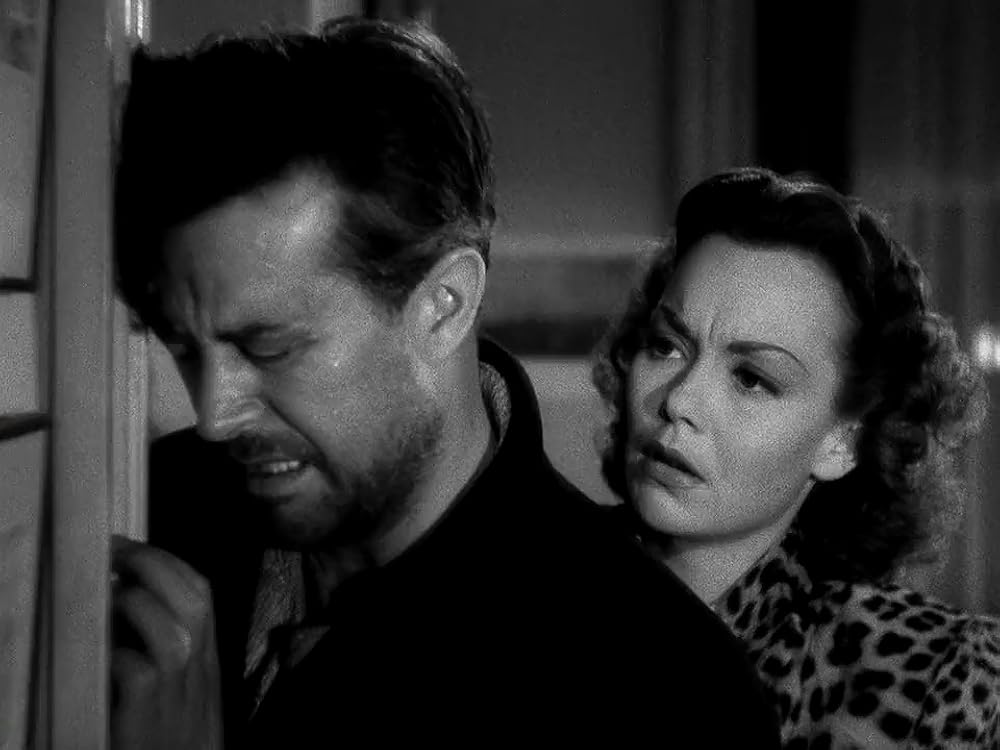
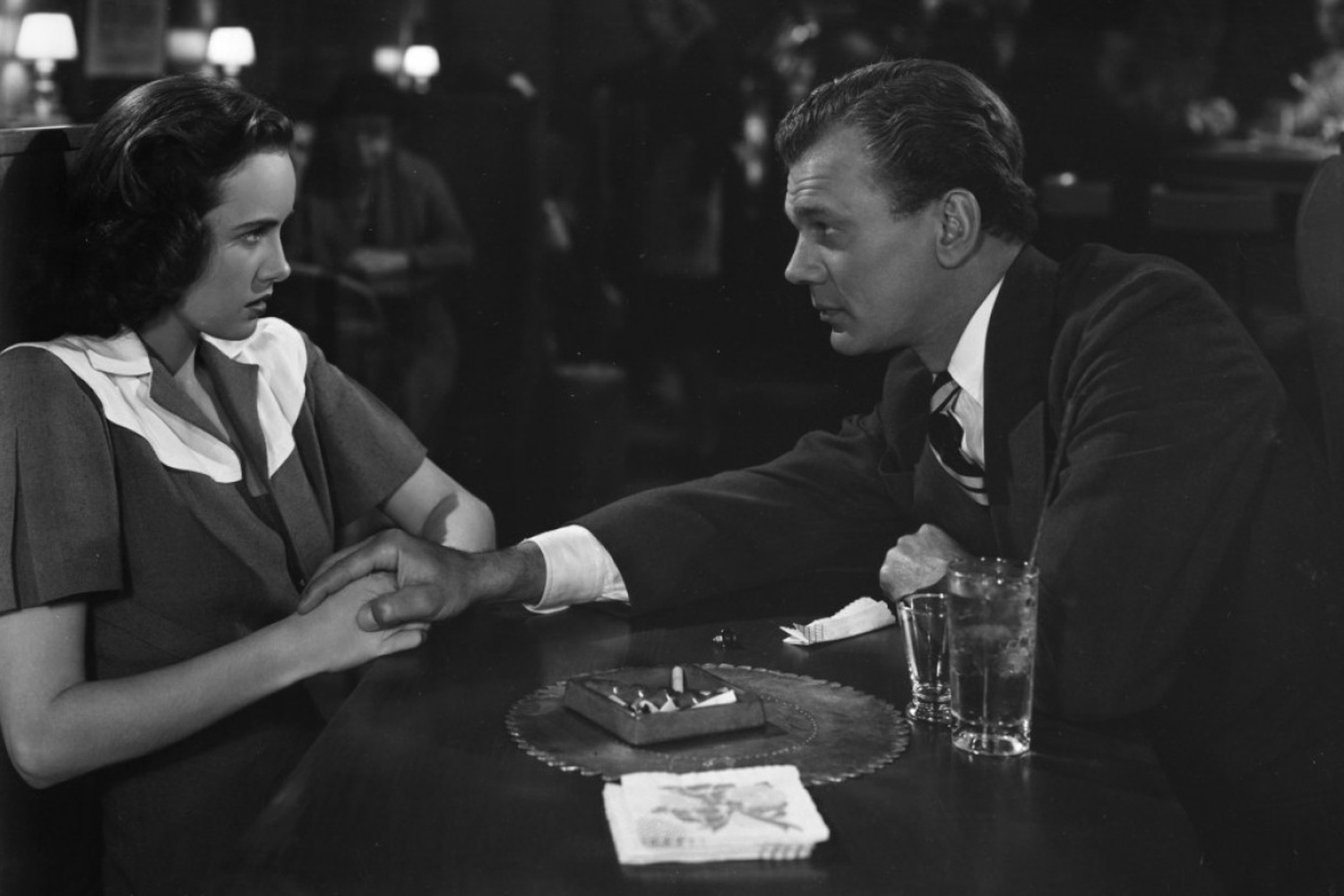
Gun Crazy

(John Dall, Peggy Cummins, Berry Kroeger, Russ Tamblyn [credited as Rusty Tamblyn]. Directed by Joseph H. Lewis.)

Bonnie and Clyde (1967) and many other “lovers on the run from the law” movies are deeply indebted to Gun Crazy.

Eddie Muller, who wrote a whole book on Gun Crazy, has called it “a film so singular, so weirdly ahead of its time, that it really isn’t representative of anything, other than how unexpected and extraordinary a film can be when it’s produced outside the mainstream and the industry’s radar.” He says Gun Crazy “barely caused a ripple upon its general release … but is now recognized as one of the most dynamic and subversive movies of its day.”

A New Yorker piece describes this film noir:

It’s a strangely inward, muted depiction of a pair of criminals who take little pleasure in their crimes. Bart Tare and Annie Laurie Starr are sharpshooters who meet at a carnival. Bart is sketched out with psychological depth; his backstory — as an orphan for whom guns play a symbolic role that diverges from his aversion to violence — takes the first ten minutes of the film …

The director, Joseph H. Lewis, is a masterful stylist as well as a daring innovator. For instance, he films one bank robbery from inside a car, on location, with portable sound equipment, in a single take that runs three and a half minutes. (He discusses it in detail in a superb interview in Peter Bogdanovich’s book “Who the Devil Made It.”) His artistic inventions extend to the direction of actors: his stars, John Dall and Peggy Cummins, aren’t the last word in charisma, but, by directing them to speak in virtual whispers, he conjures an ambivalent intimacy that draws viewers uneasily close to a world of depravity. Lewis ingeniously plays down the violence but, by playing up Bart’s sensitivity to violence, brings the world of cinematic crime menacingly close to most viewers’ real-world aversions. In short, it’s a strikingly modern, complex, disturbing, and yet sad, touching, and romantic film.

That article makes Gun Crazy sound like it’s all about how the two main characters feel about violence. But what’s just as important is how they feel about each other.

I love the scene when the couple is heading to a road-side stop to get married, and she warns him: “You’re signing up for an awful long term.” He responds with his own warning: “I’ve served a term already — reform school. When I was a kid, I stole a gun from a hardware store and I —” But she cuts him off, unfazed by his confession, and then the lovers embrace in an arresting moment that shows what the New Yorker writer meant by “ambivalent intimacy”:

Bart, I’ve never been much good. … You aren’t getting any bargain. … But I’ve got a funny feeling that I want to be good. I don’t know, maybe I can’t, but I’m gonna try.

The scene in this video is from a little later — by now they’ve frittered their money away on gambling during their honeymoon, and their tone has changed:

The screenplay of Gun Crazy was co-written by Dalton Trumbo, using a pseudonym because he was blacklisted by Hollywood. Sadly, that didn’t become publicly known until the 1990s, after he died.

A note on the year: Gun Crazy is often referred to as a 1950 movie, but I’m listing it under 1949 based on the Encyclopedia of Film Noir (2007), which says the movie was originally released in 1949 under a different title (Deadly Is the Female) before being re-released as Gun Crazy in 1950.

You can stream Gun Crazy on Tubi (free with ads) or these sites.


2nd favorite of 1949:

A Letter to Three Wives

(Jeanne Crain, Linda Darnell, Ann Sothern, Kirk Douglas, Paul Douglas, Thelma Ritter [uncredited], Celeste Holm [uncredited]. Directed by Joseph L. Mankiewicz.)

That video is the scene that sets up the premise of this multi-layered romantic comedy, when the three wives receive a letter from their friend Addie Ross right after realizing that she’s left town for good:

Open it up!

No, let’s wait … till we get back. Knowing Addie, I mean, why let her spoil our day?

Not my day! Addie Ross never saw the day she could spoil my day! Did I put enough days into that?

Dearest Debby, Lora Mae, and Rita: As you know by now, you’ll have to carry on without me from here. It isn’t easy to leave a town like our town, to tear myself away from you three dear, dear friends who have meant so much to me. And so I consider myself extremely lucky to be able to take with me a sort of memento — something to remind me always of the town that was my home, and of my three very dearest friends, who I want never to forget. And I won’t. You see girls, I’ve run off with one of your husbands. — Addie

So then the three wives have to figure out which one of their husbands has left them for Addie. An IMDb reviewer says: “Although the construction is artificial, the script is wickedly knowing, painting a truly subversive vision of American marriage and mores of the late 1940s.”

Stream A Letter to Three Wives on these sites.


3rd favorite of 1949:

Thieves’ Highway

(Richard Conte, Valentina Cortese, Lee J. Cobb, Millard Mitchell, Barbara Lawrence, Jack Oakie. Directed by Jules Dassin.)

A World War II veteran, Nick Garcos (Richard Conte), is delighted to come home and see his girlfriend (Barbara Lawrence) and parents near Fresno, California, only to be horrified to learn that his father’s legs were chopped off by a ruthless businessman named Mike Figlia (Lee J. Cobb), who sells fruits and vegetables in San Francisco. 

In an attempt to beat Mike at his own game, Nick teams up with an underhanded apple seller, Ed (Millard Mitchell, better known as the studio exec in Singin’ in the Rain, one of my favorite movies of 1952), to go on a dangerous trip to San Francisco to sell apples in Mike’s territory. 

Later on, watch for an iconic and meaningful shot involving apples.

Thieves’ Highway has been described as a critique of free-market capitalism, though whether it really works on that level is something you could think about while watching it. 

Directed by Jules Dassin (who also directed Brute Force, my favorite of 1947, and Rififi, one of my favorites of 1955), Thieves’ Highway defies noir cliches and turns out to be surprisingly subversive for 1949.

For reasons that aren’t clear at first but become essential to the story, Nick, who seems to be practically engaged to his girlfriend, encounters an alluring woman who comes on strong, Rica (Valentina Cortese, an Italian actress who didn’t speak English and had to sound out her lines). As Eddie Muller’s book on noir (Dark City) points out, the sexual dynamic between Rica and Nick (I deliberately put her name first!) is drawn out and accentuated as much as it is only because the heavy censorship of the 1940s prevented things from getting more explicit.

The useful website TV Tropes has summed up the “femme fatale” trope as: “First, she turns you on. Then, she turns on you.” Rica seems almost too knowing about that trope when Nick compliments her “soft hands,” and she responds by displaying her fingernails and warning him: “sharp nails.”

I’ve seen a lot of noirs, so I thought I could see where this one was going … but I underestimated Rica. While Nick is this movie’s protagonist, Rica is its soul.

Stream Thieves’ Highway on these sites.


4th favorite of 1949:

The Heiress

(Olivia de Havilland, Montgomery Clift, Ralph Richardson, Miriam Hopkins. Directed by William Wyler.)

The joys of love / They last but a short time / The pains of love / Last all your life, all your life

It’s a lovely song!


5th favorite of 1949:

Bitter Rice

[Italian: Riso Amaro]

(Silvana Mangano, Vittorio Gassman, Doris Dowling, Raf Vallone. Directed by Giuseppe De Santis.)

From an AV Club review:

screenwriter Carlo Lizzani says [in an interview on the Criterion blu-ray] that ‘no neorealist film belongs to any one genre,’ and this film is a clear case in point. It has the grim fatalism of other neorealist-noir hybrids … but at times it also recalls female-focused Hollywood melodramas in the way it explores the complicated relationships among women. …

[Director Giuseppe De Santis] and his producer Dino De Laurentiis had a dual purpose in making a film noir with two femmes fatale. Their intention was partly noble: to record the lives of these hard-working women, who form a sisterhood and a society even while being exploited by bosses and unions. But it’s pointless to deny that Bitter Rice is also meant to be heart-stoppingly sexy. …

Stream Bitter Rice on the Criterion Channel (with extras). If you don’t subscribe, try a free trial. Or stream it on these sites.


6th favorite of 1949:

Obsession

(Robert Newton, Phil Brown, Sally Gray. Directed by Edward Dmytryk.)

This British movie was called The Hidden Room in the US. You can stream it on the Criterion Channel, which includes an intro by Imogen Sara Smith. She says:

What I love most about this movie is the way it balances suspense and black comedy in perfect proportion. It’s a witty take on the idea of the perfect crime, and it’s full of sly commentary about the British love of murder stories and their ability to be terribly polite and diabolically macabre at the same time. …

While Obsession is not exactly a film noir, it certainly has elements of that style and mood, especially in scenes that are set in one of the many bombed-out ruins that were still common in London in the late 1940s. [Director Edward Dmytryk] creates wonderful contrasts between a very comfortable world and the savagery literally under the surface, evoking the madness of the Cold War era through the intimate battle of wits and war of nerves among the characters. …

One more thing: if you love dogs, you’re in for a special treat with Obsession.

Again, you can stream Obsession on the Criterion Channel (try a free 14-day trial if you don’t subscribe). Or stream it on Tubi (free with ads).

Click here for the full list of my favorite movie(s) of each year from 1920 to 2020.

my favorite movies of 1948:

(1) Bicycle Thieves

(2) Unfaithfully Yours

(3) Rope

(4) The Big Clock

(5) The Treasure of the Sierra Madre

(6) Pitfall

(7) Road House

favorite of 1948:

Bicycle Thieves

[Italian: Ladri di Biciclette]

(Lamberto Maggiorani, Enzo Staiola, Lianella Carell. Directed by Vittorio De Sica.)

Bicycle Thieves is the literal translation used by Criterion, but this movie is often called The Bicycle Thief.

From that New York Times video about the movie:

At the end of the Second World War, Italy was a traumatized country, wracked by poverty and political turmoil, and Italian filmmakers responded to these conditions by inventing a new and vital style of filmmaking. It was called neo-realism. It involved the use of non-professional actors, real-life locations, documentary footage, and it told simple stories about the harshness of life.

One of the masterpieces of neo-realism is The Bicycle Thief, directed by Vittorio De Sica. … Somehow, this film seems more relevant, more powerful, maybe more real than ever.

The Bicycle Thief tells the story of Antonio Ricci, a poor man living in Rome, played, in what is really an extraordinary performance, by Lamberto Maggiorani, who was not a trained actor, but a steel worker. …

At the beginning of the film, Antonio finds a job — not an easy thing to find in Rome in those days. The only requirement is that he has to have a bicycle. And on the very first day of work, his bicycle is stolen. So he and [his son] Bruno travel through the city trying to get it back.

The city of Rome plays a very important role in this film — not the picture-postcard-tourist Rome, but a harsh, strange, unsettling place. One of the things that neo-realism does, and that De Sica is brilliant at, is taking you on a tour of the city and showing, in very simple scenes, how a whole society works. This society seems organized, almost as a conspiracy, to strip its members, in particular its poorest citizens, of their very dignity.

Stream Bicycle Thieves on the Criterion Channel, which includes bonus features. If you don’t subscribe, try a free trial. Or stream it on Amazon Prime, Max, Tubi (free with ads — it left Tubi but will likely come back), Kanopy, or these sites.

UPDATE (June 2025): Enzo Staiola, who was 8 years old when he acted in Bicycle Thieves, has died at age 85. (Washington Post obituary — free gift link.) His compelling performance as the main character’s son is essential to giving this movie a heart, and giving us a perspective from which to see the flawed, struggling man.


2nd favorite of 1948:

Unfaithfully Yours

(Rex Harrison, Linda Darnell, Rudy Vallee. Directed by Preston Sturges.)

The conductor of a symphony orchestra (Rex Harrison) becomes filled with barely pent-up rage when he assumes his wife (Linda Darnell) is cheating on him based on unclear circumstantial evidence. Where that story will end up might be predictable, but how it gets there — through the eyes and ears of the conductor, into a whirlwind of his music-driven fantasies, conflicting notions, and grandiose folly — is delightful and insightful.

The Criterion DVD commentary talks about how this movie not only flopped at the time, but turned out to be the beginning of the end of writer/director Preston Sturges’s career. His string of successful comedies earlier in the ’40s (including my second choice for 1941) had made him the third highest paid American (!) … but after Unfaithfully Yours, he never had another hit. The world might not have been ready for this movie’s unconventional mix of screwball comedy and film noir in 1948, but Unfaithfully Yours is ripe for being rediscovered.

Eddie Muller, TCM’s noir expert, has a series called “Noir or Not?” where he briefly discusses whether a certain movie should be called a “noir.” Here’s his 20-second segment about Unfaithfully Yours, which he calls “the greatest satire of film noir ever”:

Stream Unfaithfully Yours on these sites.


3rd favorite of 1948:

Rope

(James Stewart, John Dall, Farley Granger. Directed by Alfred Hitchcock.)

Hitchcock’s first color movie centers on one object. It all takes place in one apartment in real time. And it largely feels as if it’s done in one take, though that’s an illusion. It isn’t Hitchcock’s best: some of the acting is wooden or over the top, and the story is perhaps disappointingly straightforward. But the experiment is fascinating to watch.

There’s an inside joke when two characters try and fail to remember the name of a movie that starred Cary Grant and Ingrid Bergman. At that point, they had been in only one movie together, and it was also directed by Hitchcock — my top choice for 1946. This was a wink at the fact that Cary Grant turned down the role that went to Jimmy Stewart in Rope: a professor whose two former students strangle a man at the beginning of the movie, then throw a party in the room where they’ve hidden the body.

Rupert only publishes books he likes, usually philosophy. …

Rupert’s extremely radical. Do you know that he selects his books on the assumption that people not only can read, but actually can think?

Stream Rope on YouTube (free with ads), Amazon Prime (it left but will likely come back) or these sites.


4th favorite of 1948:

The Big Clock

(Ray Milland, Charles Laughton, Maureen O’Sullivan, George Macready, Elsa Lanchester. Directed by John Farrow.)

This is film noir with an anti-corporate angle, where working for a company feels like a nightmare. Earl Janoth is the tyrannical head of a New York City media conglomerate called Janoth Publications, which puts out magazines that seemingly cover every aspect of modern life, with names like Sportways, Artways, and Futureways. George Stroud is the editor of Crimeways, but he keeps trying to escape from the burdens of that job and the city, while he fears he’ll be framed for murder — the same murder he’s been put in charge of investigating.

Stroud feels increasingly trapped in the imposing Janoth headquarters building. The building becomes a character, similar to a two-faced, menacing villain, with slick conference rooms and magazine logos that feel like a front for ominously dark areas deeper into the building. One of the cinematographers who shot those shadowy spaces was John F. Seitz, who also worked on the seminal noir Double Indemnity (my favorite movie of 1944).

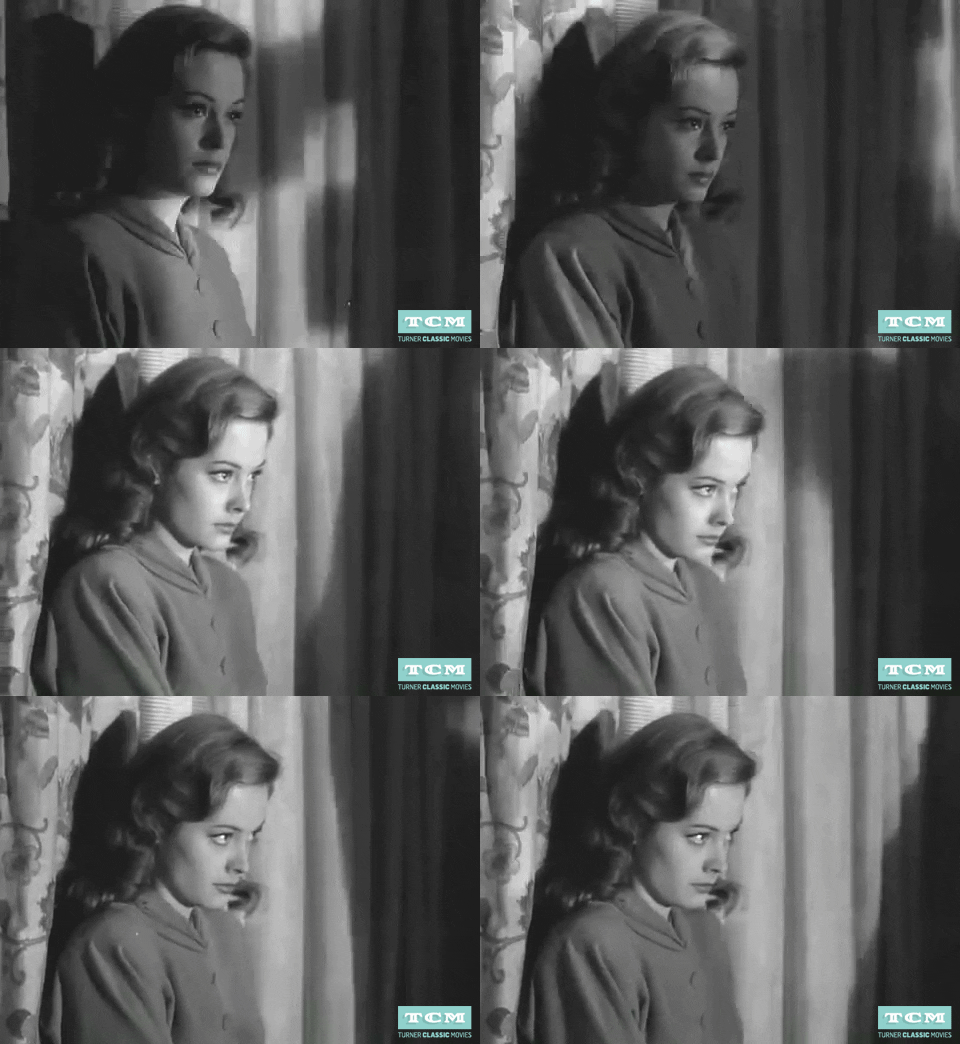
To get a sense of The Big Clock’s dark visual quality, look at this shot, where one of Janoth’s toadies (on the left) searches for Stroud, who’s hiding against a wall on the right. (The toady is chillingly played by Harry Morgan — credited as “Henry Morgan” in an early role, long before he starred on the TV show M*A*S*H in the ’70s and ’80s.)

But The Big Clock isn’t all dark and foreboding; it’s livened up by comical moments and a host of supporting characters such as a kooky painter, delightfully played by Elsa Lanchester. In real life she was married to Charles Laughton, who plays Janoth. A blu-ray extra says that Ray Milland, who plays Stroud, was repulsed by Laughton’s bisexuality, possibly adding to the tension between the two men in the movie. The novel on which the movie was based has Laughton’s character in an affair with a male subordinate (played by George Macready); that angle had to be left out of the movie because of the strict censorship of the 1940s, but it’s interesting to think about as a subtext to The Big Clock.

The director (John Farrow) and the actress who plays Stroud’s wife (Maureen O’Sullivan) were married, and one of their kids was Mia Farrow. That real-life mother and daughter eventually played a mother and daughter in Woody Allen’s Hannah and Her Sisters (one of my favorite movies of 1986).

The Big Clock was remade as a political thriller: No Way Out, one of my favorite movies of 1987, with Kevin Costner and Gene Hackman in the roles originally played by Ray Milland and Charles Laughton.

Stream The Big Clock on these sites.


5th favorite of 1948:

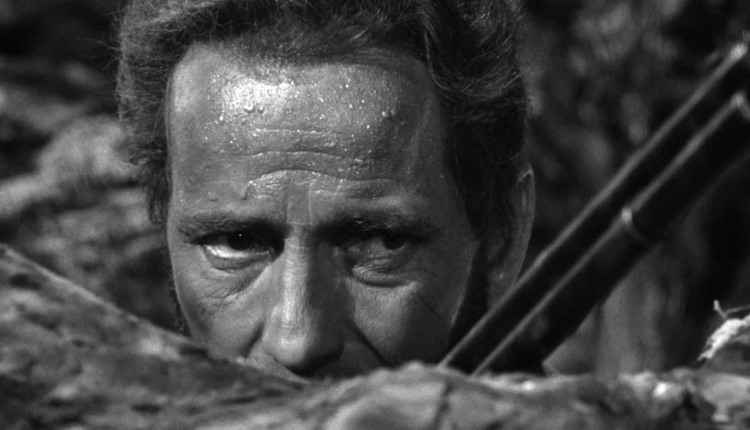
The Treasure of the Sierra Madre

(Humphrey Bogart, Walter Huston, Tim Holt. Directed by John Huston.)

This Slant review says:

There lies a certain irony in the fact that Humphrey Bogart, the most highly paid star of his era, would use his hard-earned creative freedom to play against type as a down-on-his-luck loser blinded by greed in a movie about gold digging that would, in turn, prove a box office dud. But where there is irony, there is truth, and The Treasure of the Sierra Madre remains one of the most insightful films ever made about greed and the thorny effects of temptation on human nature. … The Treasure of the Sierra Madre bears witness to mankind’s contemptible willingness — nay, eagerness — to subjugate his brother in the name of short-term material advancement.

Conscience! What a thing! If you believe you got a conscience, it’ll pester you to death! But if you don’t believe you got one … what could it do to ya?

Stream The Treasure of the Sierra Madre on these sites.


6th favorite of 1948:

Pitfall

(Dick Powell, Lizabeth Scott, Raymond Burr, Jane Wyatt. Directed by André de Toth.)

This is the movie to watch if you like film noir but get tired of the usual trope of the “femme fatale” who lures a sympathetic but weak man into a downward spiral. Pitfall turns that formula on its head. (More analysis here, with spoilers.)

In these scenes the male protagonist (Dick Powell), who’s gotten bored of his predictable domestic life with his wife (Jane Wyatt) and kid, meets the woman he’s investigating (Lizabeth Scott):

The streaming versions I’ve seen have a washed-out picture that saps Pitfall of its darkness, which is particularly unfortunate for a noir. Instead I recommend the Kino blu-ray, which includes commentary by noir expert Eddie Muller, with insights such as why it matters when the married couple has a confrontational conversation in a room of their house with wildly patterned wallpaper that we haven’t seen before.

In short, Pitfall is an uncommonly subtle and adult noir.


7th favorite of 1948:

Road House

(Ida Lupino, Richard Widmark, Cornel Wilde, Celeste Holm. Directed by Jean Negulesco.)

Road House starts out as a campy melodrama about two old friends who are the owner (Richard Widmark) and manager (Cornel Wilde) of a “road house,” which includes a cocktail lounge … and a bowling alley (!) … in a small town near the Canadian border. A woman (Ida Lupino) who shows up as the lounge’s new jazz singer/pianist comes between the two men. The movie transforms into a film noir when one of the men becomes so jealous that he starts taking desperate measures to control both of the other two.

Ida Lupino was one of the great actresses of this time period, and she has moments of subtlety that hint at an unspoken meaning to this overlooked movie. She sings a couple songs in a low-key style — here’s her first performance at the lounge (yes, it’s really Lupino singing):

I don’t know anywhere to stream Road House, but I recommend the Kino blu-ray.

Click here for the full list of my favorite movie(s) of each year from 1920 to 2020.

my favorite movies of 1947:

(1) Out of the Past

(2) Brute Force

(3) Repeat Performance

favorite of 1947:

Out of the Past

(Robert Mitchum, Jane Greer, Kirk Douglas, Rhonda Fleming. Directed by Jacques Tourneur.)

As the title of this film noir suggests, Out of the Past masterfully uses the dimension of time, flashing back to the story the protagonist (Robert Mitchum) is telling near the beginning, eventually coming back to when the movie started, and continuing from there into the future.

Imogen Sara Smith, in her book In Lonely Places: Film Noir Beyond the City, describes Out of the Past in musical terms:

The long flashback that fills in the back story is like a movie within a movie, narrated by Mitchum, strung together by a theme song (“The First Time I Saw You”) that plays everywhere he goes. … Mitchum’s voice is like the lead instrument of a jazz ensemble, setting the pace of the film, giving it a distinctive, coherent sound — his sound, cool and weary and knowing, developed through different moods and tempos and melodies. An accomplished singer, Mitchum referred to his dialogue as “the lyrics” and treated it that way, delivering his lines behind the beat, the way Sinatra sings. Though he has no musical interludes in Out of the Past, no film better captures his musicality, his sense of rhythm, pace and inflection.

The script is one long improvisation on the theme of disenchantment, full of blue notes and hot riffs. Jane Greer (also a singer) contributes her gorgeous, dry contralto and Kirk Douglas, jumping avidly on every line, offers a perfect counterpoint to Mitchum. (“You just sit there and stay inside yourself; you wait for me to talk,” [Douglas] observes on first meeting [Mitchum].)

A video on what makes Out of the Past a great film noir:

I think I’m in a frame. I don’t know, all I can see is the frame. I’m going in there now to look at the picture.

Stream Out of the Past on HBO Max, these Roku channels (some might be free), or these sites.


2nd favorite of 1947:

Brute Force

(Burt Lancaster, Hume Cronyn, Charles Bickford, Yvonne De Carlo, Ann Blyth, Sam Levene, Ella Raines, John Hoyt. Directed by Jules Dassin.)

Criterion sums up this “prison melodrama with a scathing critique of the punitive American incarceration system at its heart”:

Burt Lancaster is the timeworn Joe Collins, who, along with his fellow inmates, lives under the heavy thumb of the sadistic, power-tripping guard Captain Munsey (a riveting Hume Cronyn). Only Collins’s dreams of escape keep him going, but how can he possibly bust out of Munsey’s chains? Matter-of-fact and ferocious, Brute Force builds to an explosive climax that shows the lengths men will go to when fighting for their freedom, and asks the question of who society’s real brutes are.

I was sent here today for one reason: to tell you that if there’s any more trouble, if this prison isn’t brought under the strictest control, there’ll be an immediate change in practically all personnel. We don’t want to be bothered any more. Is that clear … ?

Oh, absolutely: you can’t be bothered. Well, that simplifies everything! … You put up prisons, thick walls, and then your job is over, finished. But is it over? … “New personnel”! “Absolute discipline”! Do you know what this prison is … ? One big human bomb. And you say, “Kick it, and it’ll be quiet. Smash it, and it won’t explode.”

Film noir expert Eddie Muller’s intro to Brute Force:

Stream Brute Force on the Criterion Channel (with extras including commentary), Max, or Tubi (free with ads). If you don’t subscribe to the Criterion Channel, try a free trial.


3rd favorite of 1947:

Repeat Performance

(Joan Leslie, Louis Hayward, Richard Basehart. Directed by Alfred L. Werker.)

Repeat Performance is an unusual genre hybrid: a “fantasy noir.” The movie opens with an actress, Sheila Page (Joan Leslie), killing her husband (Louis Hayward) on New Year’s Eve. Distraught at what she’s done, Sheila wishes she could relive the past year, the year when her husband became involved with Paula Costello (Virginia Field), who wrote a play Sheila is starring in. Sheila gets her wish: she’s magically transported back to the beginning of the year. But doing it all over again won’t be easy …

If you don’t mind a movie that indulges in over-the-top melodrama while throwing realism out the window, Repeat Performance is a fun break from standard noir fare.

One subtle thing in this mostly unsubtle movie: the poet played by Richard Basehart (in his debut, before he was in Fellini’s La Strada) is gay in the novel. That’s not made explicit in the movie; it’s “coded” through his soft manner and the fact that his whole role is being a close platonic friend to Sheila. I suggest focusing on his character and noticing how he’s different from the expected depiction of gay people back in the 1940s. I think this movie was secretly trying to do something ground-breakingly progressive for the time with him.

Stream Repeat Performance on Kanopy, or these sites.

Click here for the full list of my favorite movie(s) of each year from 1920 to 2020.

my favorite movies of 1946:

(1) The Strange Love of Martha Ivers

(2) It’s a Wonderful Life

(3) Notorious

(4) The Best Years of Our Lives

(5) The Postman Always Rings Twice

(6) Gilda

favorite of 1946:

The Strange Love of Martha Ivers

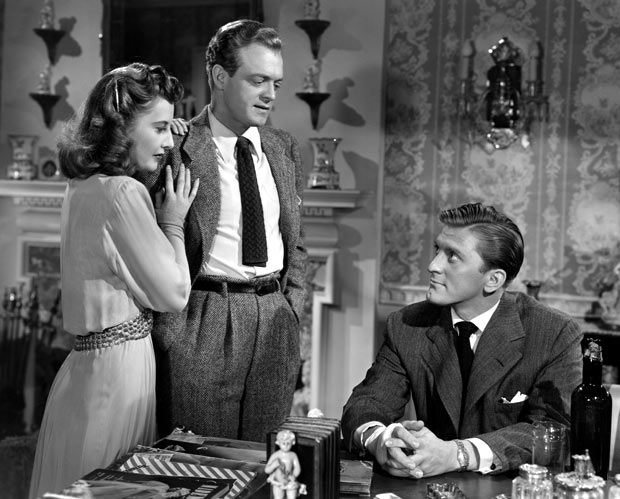
(Barbara Stanwyck, Van Heflin, Kirk Douglas, Lizabeth Scott, Judith Anderson. Directed by Lewis Milestone.)

The Strange Love of Martha Ivers stands out from the typical film noir because of the way we start with kids (around 13 years old) on a pivotal stormy night. When the movie skips ahead to their adulthood, we have a richer sense of the characters as full human beings, haunted by a secret.

This movie is in the public domain, so you can watch the whole thing for free on YouTube:

You can also watch it on one of these other sites.

There are several fine performances in The Strange Love of Martha Ivers, but one that deserves particular attention is the late Kirk Douglas in the first movie of his long life. (He died at age 103 in 2020.) His character is a prosecutor who’s an alcoholic, and that role must have felt personal to him — his New York Times obituary says:

[His small hometown’s] mills did not hire Jews, so his father … became a ragman, a collector and seller of discarded goods. “Even … in the poorest section of town, where all the families were struggling, the ragman was on the lowest rung on the ladder,” Mr. Douglas wrote. “And I was the ragman’s son.”

A powerful man who drank heavily and got into fights, the elder Demsky [the family’s real last name] was often an absentee father, letting his family fend for itself. Money for food was desperately short much of the time, and young Izzy [his childhood nickname] learned that survival meant hard work. …

“That’s what it’s all about,” he said in describing what had driven him. “That’s the core, that early part of you.”
The characters in The Strange Love of Martha Ivers wrestle with the question of whether “that early part of you” is what their lives need to be “all about.”


2nd favorite of 1946:

It’s a Wonderful Life

(James Stewart, Donna Reed, Lionel Barrymore, Henry Travers, Thomas Mitchell, Gloria Grahame. Directed by Frank Capra.)

This Chicago Tribune piece talks about how Jimmy Stewart’s PTSD after serving in World War II affected his performance in It’s a Wonderful Life.

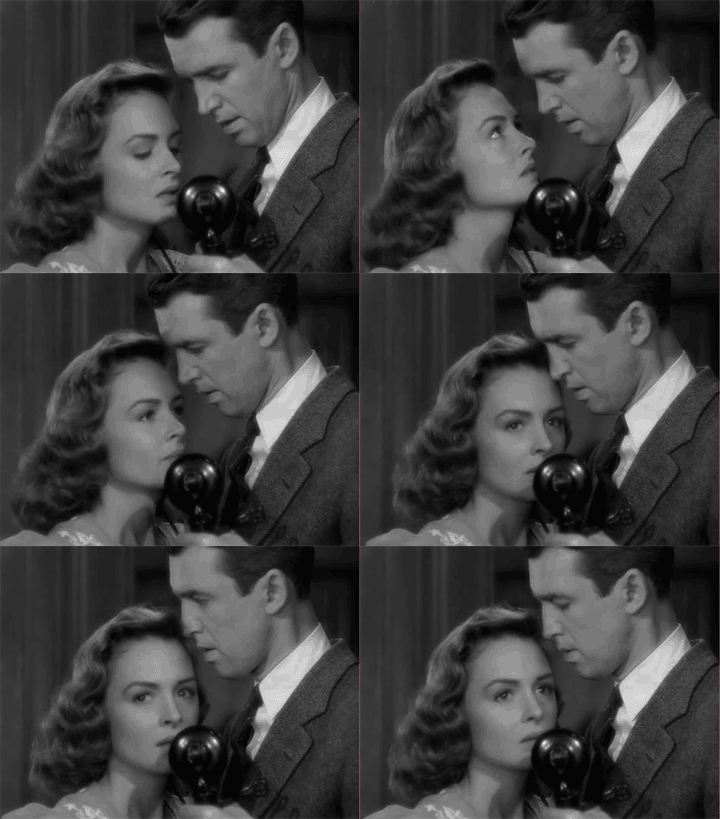
After not having seen this movie in over a decade, I rewatched it around Christmas of 2020 (alone, because of the pandemic). I wanted to see if I’d still enjoy it enough to include it on this list of my favorite movies of each year — and not out of a sense of obligation just because it’s one of the most beloved American movies. I know the exact moment when I realized I had to put it on the list. I became so overwhelmed with emotion that I instinctively paused it, stood up, and walked around for a while to calm down. What had this effect on me? Two words …

There is no George Bailey. You have no papers … no driver’s license. … They’re not there either.

What?

Zuzu’s petals. You’ve been given a great gift, George: a chance to see what the world would be like without you.

In the video below, you can see “Awkward Ashleigh” reacting to watching the movie for the first time:

Stream It’s a Wonderful Life on these sites.


3rd favorite of 1946:

Notorious

(Ingrid Bergman, Cary Grant, Claude Rains. Directed by Alfred Hitchcock.)

Repressed emotion can be the most emotional of all.

Ebert said:

This is the film, with “Casablanca,” that assures Ingrid Bergman’s immortality. She plays a woman whose notorious reputation encourages U.S. agents to recruit her to spy on Nazis in postwar Rio.
From Criterion’s essay:
The performances by [Cary Grant and Claude Rains] are dynamic high-water marks in their towering careers. But even amid these wonders, it is Bergman who is the crowning jewel. She brings an untold warmth, a sincerity, and a vulpine physicality that make her character a beguiling outlier not only in Hitchcock’s canon but also within forties cinema and Bergman’s own career.

Ebert:
Hitchcock’s “Notorious” is the most elegant expression of the master’s visual style. … It contains some of the most effective camera shots in his — or anyone’s — work.
Criterion on that point:
Hitchcock and cinematographer Ted Tetzlaff are constantly reminding us where characters are in relation to one another, creating an intricate choreography in which even the most minute gestures — a hand enclosing a key, a gaze, a shaky grin — are charged with eroticism and violent potential.

I don’t go for patriotism, or patriots — waving a flag with one hand and picking pockets with the other.

You can stream Notorious on Tubi (it left but will likely come back) or these sites, but I recommend the Criterion blu-ray (or DVD). I admit I didn’t “get” this movie when I first saw it; what made it click for me was listening to the two commentary tracks on the Criterion blu-ray and then watching the movie again. Criterion movies are 50% off at Barnes & Noble every July and November, and Amazon often lowers prices in response.


4th favorite of 1946:

The Best Years of Our Lives

(Dana Andrews, Harold Russell, Fredric March, Teresa Wright, Virginia Mayo, Myrna Loy, Hoagy Carmichael. Directed by William Wyler.)

In the video below, Mel Brooks talks about how The Best Years of Our Lives “captured exactly what America felt in 1945, 1946”:

After the war, there was a lot of emotional disarray, and it was a healing picture. … It spoke to us deeply about the catastrophe we’d just gone through, and the need for us to make peace — not only in the world, but in our souls, and with each other.

Ebert said:
Seen more than six decades later, it feels surprisingly modern: lean, direct, honest about issues that Hollywood then studiously avoided. After the war years of patriotism and heroism in the movies, this was a sobering look at the problems veterans faced when they returned home.
Ebert summed up the video below:
One of the movie’s most famous sequences involves Fred [Dana Andrews] deciding to leave town in search of work, and going to the airport. While waiting for his military transport flight, he wanders into a vast graveyard of mothballed warplanes. This scene is heartbreaking. Once Fred flew these planes, and now they, and their pilots, are no longer needed. …

More from Ebert’s review:

“The Best Years of Our Lives” doesn’t use verbal or technical pyrotechnics. It trusts entirely in the strength of its story. One of the sources of its power is the performance by Harold Russell, the handless veteran. … [L]ook at the heartbreaking scene where [his character] Homer invites [his fiancé] Wilma up to his bedroom — not to make a pass, but to show her what is involved in getting ready for bed. He thinks maybe then she’ll understand why he doesn’t think he can marry her. …
This is when I know I’m helpless. My hands are down there on the bed. …

Stream The Best Years of Our Lives on Amazon Prime, YouTube (free with ads), or these sites.


5th favorite of 1946:

The Postman Always Rings Twice

(Lana Turner, John Garfield, Cecil Kellaway, Hume Cronyn. Directed by Tay Garnett.)

When I first saw this classic film noir, I found it hard to get past its similarities to Double Indemnity (my favorite movie of 1944), starting with a man meeting an alluring blonde woman who feels trapped in her marriage and wishes her husband were dead. I enjoyed The Postman Always Rings Twice more on rewatch, when I set all that aside and focused on what makes it stand out: the dangerous chemistry between Frank (John Garfield) and Cora (Lana Turner); Cora’s mix of strengths and weaknesses, making her feel more like a real person than the typical “femme fatale”; the way the intricacies of the legal system can interfere with relationships; the exploration of the human capacity for rationalizing the unfathomable …

This video goes through “10 Golden Frames” from The Postman Always Rings Twice (with spoilers):

Stream The Postman Always Rings Twice on Tubi (free with ads) or these sites.


6th favorite of 1946:

Gilda

(Rita Hayworth, Glenn Ford, George Macready. Directed by Charles Vidor.)

If you want to see perfect casting, look at Rita Hayworth (born Margarita Cansino) as the title character in Gilda. She gives an electrifying performance that blends wit and defiance with touching vulnerability. The “femme fatale” trope doesn’t do justice to this woman trapped by controlling men.

One of those men is her husband, Ballin Mundson (George Macready), who owns the casino the characters’ lives revolve around, with a similar vibe to Rick’s gin joint in Casablanca (my favorite movie of 1942). Before we ever see Gilda, Ballin has an odd meet cute with Johnny Farrell (Glenn Ford) when Ballin uses his “little friend” — a cane with a blade at the tip — to rescue Johnny from a robber. Somehow, that leads to Ballin delegating a surprising amount of responsibility to Johnny: not just running the casino but also keeping Gilda in line.

Gilda isn’t perfect — it’s too bad the narrator is Glenn Ford, who gives a more conventional, less exciting performance than Rita Hayworth. We’re hearing Johnny’s perspective while we’re really more interested in Gilda’s. The plot itself isn’t the movie’s strong suit, with intrigue that doesn’t quite jell and a laughably unsatisfying ending.

But I wouldn’t hold out hope for a remake to fix these shortcomings; in fact, Gilda would seem impossible to remake now. Today’s movies are blunt and in your face. In Gilda, we’re never shown all there is to see in the shadowy yet glittering underworld of the casino. Hollywood’s heavy censorship at the time meant that taboo ideas, like the sexual tension between the two men, had to be presented in a veiled way, not with too sharp a point — unless that sharp point was Ballin’s “little friend,” the cane/sword.

All this adds up to a beautiful mess of a movie driven by starkly noir-ish images, piercing stares, and tense standoffs where the line between love and hate is aggressively blurred.

You’re a child, Gilda, a beautiful, greedy child. And it amuses me to feed you beautiful things, because you eat with such a good appetite. …

If you’re worried about Johnny Ferrell, don’t be. I hate him.

And he hates you. … But hate can be a very exciting emotion. … There is a heat in it that one can feel. Didn’t you feel it tonight?

Stream Gilda on these sites.

Click here for the full list of my favorite movie(s) of each year from 1920 to 2020.

my favorite movies of 1945:

(1) Leave Her to Heaven

(2) Scarlet Street

(3) Hangover Square

(4) The Lost Weekend

favorite of 1945:

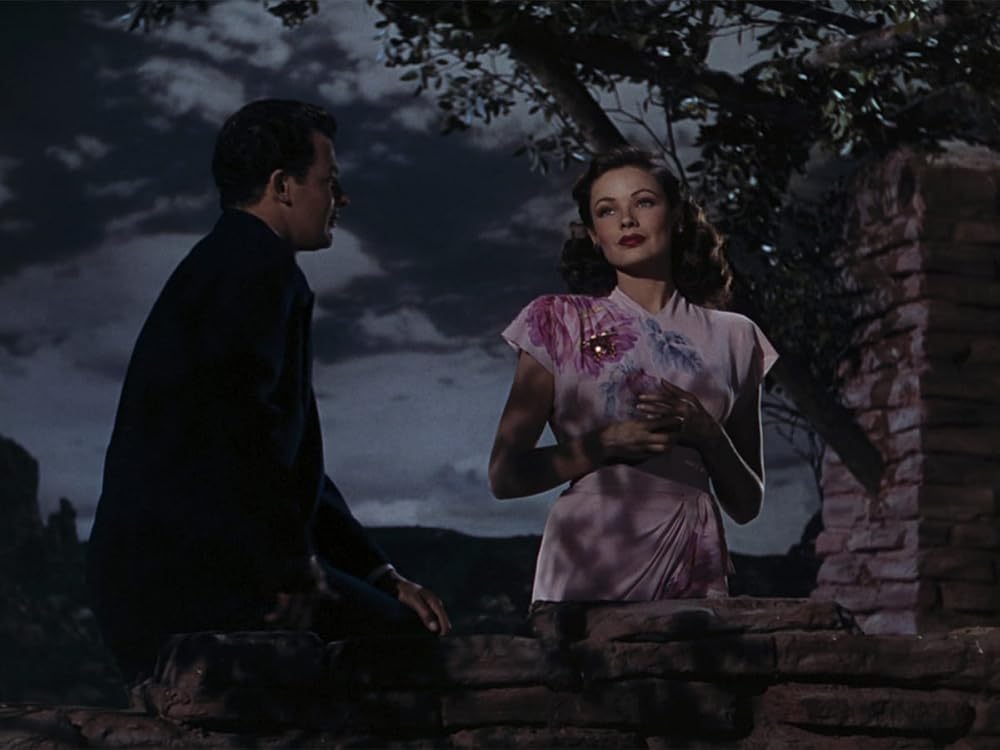
Leave Her to Heaven

(Gene Tierney, Cornel Wilde, Vincent Price, Jeanne Crain. Directed by John M. Stahl.)

This is only the second color movie on my list, and the first in the 1940s. It’s been called the first “color noir.”

Leave Her to Heaven is slow-moving at first, but eventually becomes shockingly disturbing. It was a big influence on Martin Scorsese, who included it on his list of movies with the best use of light and color. In this video, Scorsese talks about how he instantly “fell in love” with the movie, how he had an almost hallucinatory experience the first time he saw it, and how he feels like he’s experiencing the movie for the first time every time he watches it — which he does about every year or two. (If you haven’t seen the movie, I don’t recommend watching past 5 minutes into that Scorsese video, since he mentions a major spoiler.)

Here’s the original trailer — unfortunately trailers weren’t so great back then, but this gives some sense of the movie:

Wikipedia has some interesting thoughts on the movie’s allusions to Greek mythology, whether the movie is a film noir, and whether Gene Tierney’s character is a “femme fatale.”

Stream Leave Her to Heaven on these sites.


2nd favorite of 1945:

Scarlet Street

(Edward G. Robinson, Joan Bennett, Dan Duryea. Directed by Fritz Lang.)

This movie is in the public domain, so you can watch the whole thing for free on YouTube:

Some aspects of this film noir might be dated, especially the depiction of an abusive relationship. But what interests me most in Scarlet Street is the role of art, with Edward G. Robinson as a frustrated amateur painter. The movie has been praised for the authenticity of his paintings (actually by John Decker) as examples of American “outsider art” from that time. The 12 paintings in this movie later appeared in an exhibition at the Museum of Modern Art (MoMA) in New York City.

No one ever taught me how to draw, so I just put a line around what I feel when I look at things. … It’s like falling in love. … First you see someone, then it keeps growing, until you can’t think of anyone else. … Every painting, if it’s any good, is a love affair.

I never heard anyone talk like that before.

There aren’t many people you can talk to this way. So you keep it to yourself. You walk around with everything bottled up.


3rd favorite of 1945:

Hangover Square

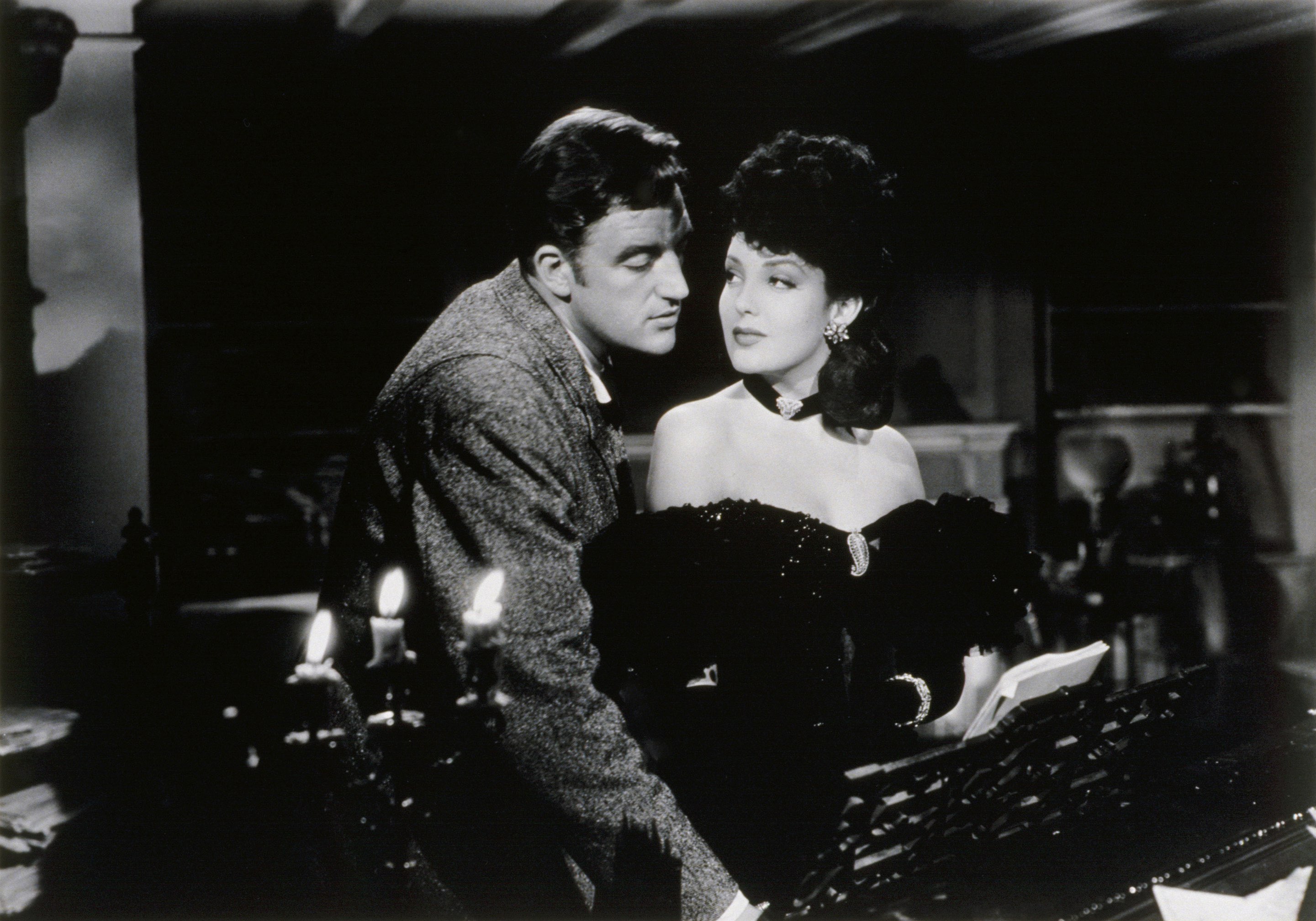
(Laird Cregar, Linda Darnell, George Sanders. Directed by John Brahm.)

A pianist/composer with selective amnesia doesn’t realize he’s a serial killer.

The actor who plays that role, Laird Cregar, was a troubled man who died at age 31, just before the movie was released (see the video below for more about that). One of the gifts Cregar brought to this movie is that he was a serious pianist in real life, so there was no need to edit the movie to avoid showing his face at the same time as his hands playing piano.

Impassioned music (composed by the great Bernard Herrmann) gives depth to Hangover Square, both as part of the story and to add to the oppressively dark atmosphere of this unusual film noir.

This 11-minute video review has brief spoilers for Hangover Square and Laura (1944) around 8:30 to 9:30:


I don’t know anywhere to stream Hangover Square, but I recommend the Kino blu-ray, which has a beautiful black and white picture quality and lots of extras (including two commentary tracks).


4th favorite of 1945:

The Lost Weekend

(Ray Milland, Jane Wyman, Howard Da Silva. Directed by Billy Wilder.)

Billy Wilder, who directed and cowrote this movie about a writer in New York City with a drinking problem, became interested in the topic after working with Raymond Chandler on the screenplay for Double Indemnity (my favorite movie of 1944). Chandler was a recovering alcoholic but had started drinking again in response to the stress of working on Double Indemnity. Wilder said he made The Lost Weekend “to explain Chandler to himself.”

A review at the time immediately appreciated what this movie achieved:

Something rare and wonderful happened when they made this picture. It’s extraordinary, to say the least, when Hollywood drops its rose colored glasses for honest story treatment. It’s the first time that Hollywood ever produced a drunk who isn’t funny. … If there has ever been a scene more terrifying than the D.T. sequence [where the alcoholic has grotesque hallucinations while suffering from delirium tremens], we hope never to see it.

The risk Wilder took in tackling the taboo subject paid off: he won Oscars for writing and directing the movie; Ray Milland won an Oscar for playing the alcoholic; and The Lost Weekend became the first of only three movies ever to win both the Oscar for Best Picture and the Palme d’Or, the top award at the Cannes Film Festival.

You don’t approve of drinking?

Not the way you drink.

It shrinks my liver. … It pickles my kidneys. … But what it does it do to my mind? It tosses the sandbags overboard so the balloon can soar! Suddenly I’m above the ordinary! … I’m one of the great ones! I’m Michelangelo molding the beard of Moses. I’m Van Gogh painting pure sunlight. I’m Horowitz playing the “Emperor” Concerto. … And out there, it’s not Third Avenue any longer. It’s the Nile … down into the barge of Cleopatra.

Stream The Lost Weekend on these sites.

Click here for the full list of my favorite movie(s) of each year from 1920 to 2020.

my favorite movies of 1944:

(1) Double Indemnity

(2) Laura

(3) Gaslight

favorite of 1944:

Double Indemnity

(Fred MacMurray, Barbara Stanwyck, Edward G. Robinson. Directed by Billy Wilder.)

This seminal film noir seems to spoil its own plot in the first scene, but we’re still riveted from the dark beginning to the oddly moving ending.

The video below starts out by saying:

Film noir presents us with something of a paradox. It is at once instantly recognizable … and yet, it’s hard to pin down exactly what noir is. …

Well, whatever noir is, we can learn everything that we need to know about it from Billy Wilder’s 1944 masterpiece Double Indemnity.
The first half of this video gives a historical overview of the classic noir era. Then it talks more specifically about Double Indemnity starting around 7:30.

How could I have known that murder can sometimes smell like honeysuckle?

If you’re not very familiar with film noir, Double Indemnity would be a perfect starting point.

You can stream it on these sites.


2nd favorite of 1944:

Laura

(Gene Tierney, Dana Andrews, Clifton Webb, Vincent Price, Judith Anderson. Directed by Otto Preminger.)

Laura considered me the wisest, the wittiest, the most interesting man she’d ever met. I was in complete accord with her on that point. She thought me also the kindest, the gentlest, the most sympathetic man in the world.

Did you agree with her there, too? …

You won’t understand this, but I tried to become the kindest, the gentlest, the most sympathetic man in the world.

Have any luck?

Let me put it this way: I should be sincerely sorry to see my neighbors’ children devoured by wolves.

I’m hesitant to say anything about this classic noir for anyone who hasn’t seen it, as it’s best to go into the mystery completely cold. Here’s a video of Mia Tiffany reacting to seeing it for the first time:

Stream Laura on these sites.


3rd favorite of 1944:

Gaslight

(Charles Boyer, Ingrid Bergman, Joseph Cotten, Angela Lansbury. Directed by George Cukor.)

From a 2019 New York Times article on how this “1940s thriller enjoys an afterlife as a classic movie and as a buzzy word in political and psychoanalytic discourse”:

The verb “to gaslight,” voted by the American Dialect Society in 2016 as the word most useful/likely to succeed, and defined as “to psychologically manipulate a person into questioning their own sanity,” derives from MGM’s 1944 movie, directed by George Cukor.

“Gaslight,” in which a diabolical husband plans to drive his wife mad through a campaign of false accusations, fabricated memories and bland denials of his previous statements, had two successful iterations before the Cukor film. … Although featuring a major star as the villain, Charles Boyer, cast against type, Cukor’s film differed from previous productions [a 1938 play and a 1940 British movie]. It strengthened the part of the abused wife — largely overshadowed by actors playing the abusive husband — by giving the role to a great actress: Ingrid Bergman.

Traumatized by the murder of her aunt, a well-known opera singer, Paula Alquist (Bergman) is inveigled by her new husband, Gregory Anton (Boyer), a fortune seeker, to taking up residence in the abandoned house where the killing occurred. There, for reasons that become obvious to the audience long before Paula is able to grasp them, he convinces her that, as she puts it, she does “senseless, meaningless things.” He also proceeds to frighten her out of her wits, in part by dimming the gaslights in the house and blaming it on her imagination.

Reviewing “Gaslight” in The New York Times, Bosley Crowther equated the husband’s mind games with the director’s. The movie, he wrote, “has pulled such a ticklish assortment of melodramatic camera tricks that the audience was giggling with anxiety.” Among the many tactics used to unnerve Paula was the hiring of an insolent Cockney housemaid (18-year-old Angela Lansbury in her first movie role). …

Mainly, however, the movie gives Bergman full rein. Girlishly trusting, passionately in love, tragically confused, hysterically terrified and implacably vengeful by turns, she runs a strenuous gamut of emotions to play her final scene as though it were a Shakespearean tragedy. … It’s remarkable that, as robust a presence as she is, she convincingly plays a timorous victim.

Ingrid Bergman won her first of three Oscars for that role.

Stream Gaslight on these sites.

Click here for the full list of my favorite movie(s) of each year from 1920 to 2020.

my favorite movies of 1943:

(1) Meshes of the Afternoon

(2) Stormy Weather

(3) Shadow of a Doubt

favorite of 1943:

Meshes of the Afternoon

(Maya Deren, Alexandr Hackenschmied. Directed by Deren and Hackenschmied.)

This is in the public domain, so you can watch it free on YouTube:

A woman (played by one of the co-directors, Maya Deren) has a disorienting dream where the ordinary objects she’s encountered during her day (a key, a flower, etc.) become charged with new significance, the place where she lives feels like an inescapable maze, and death seems to be lurking around corners. At first glance this 13-minute short might seem random and plotless, but rewatch it and you might start to see it differently.

Meshes of the Afternoon seems to be an evolution from Ménilmontant (one of my favorite movies of 1926), another short, dialogue-free silent movie that explores a woman’s mental state. But Meshes of the Afternoon doesn’t feel like a quaint homage to the silent era; it feels prophetic, pointing the way to much later experiments: the surrealism of Louis Malle’s Zazie dans le Métro (one of my favorites of 1960), the personal quest that involves confronting mortality in Ingmar Bergman’s Wild Strawberries (one of my favorites of 1957), David Lynch’s work especially Mulholland Drive (2001), and even MTV music videos.

Fun fact: Meshes of the Afternoon is the shortest movie on this list of “my favorite movies of each year from 1920 to 2020.”

In addition to watching it on YouTube (see above), you can also stream a high-quality version on the Criterion Channel. (Try a free trial if you don’t subscribe.)


2nd favorite of 1943:

Stormy Weather

(Lena Horne, Bill “Bojangles” Robinson, Cab Calloway, Dooley Wilson, Fats Waller, Ada Brown. Directed by Andrew L. Stone.)

While the story’s nothing special, the whole movie is worth watching to see the stunning musical and dance performances in their full context, not just as isolated YouTube clips. But here’s one: Lena Horne singing the title song, “Stormy Weather.” This is only part of that number, not the extended version in the movie which takes us out into the storm …

(How to stream Stormy Weather.)


3rd favorite of 1943:

Shadow of a Doubt

(Teresa Wright, Joseph Cotten, Henry Travers, Hume Cronyn. Directed by Alfred Hitchcock.)

One of Hitchcock’s favorite Hitchcock movies.

He thought the world was a horrible place. … He didn’t trust people, seemed to hate them, hated the whole world. You know, he said that people like us had no idea what the world was really like.

Well, it’s not quite as bad as that. But sometimes it needs a lot of watching. Seems to go crazy every now and then.

You can stream Shadow of a Doubt on the Criterion Channel (try a free trial) or these sites.

Click here for the full list of my favorite movie(s) of each year from 1920 to 2020.